
“I just pulled my childhood stuffed animal out of a storage bin in the basement. It looks perfect, but it smells overwhelmingly like damp, old newspapers. How do I get rid of the odor without ruining the fur?”
Whether you just unboxed your plushies from deep winter storage or scored an amazing vintage find at a thrift store, encountering that stale, musty odor is incredibly common. The good news? A bad smell does not mean the toy is ruined.
In most cases, you can safely and completely remove musty odors from stuffed animals using simple, natural household items—even if the toy has electronic parts or delicate vintage fabrics that cannot be machine-washed.
⚠️ Musty vs. Moldy: When Is a Stuffed Animal Unsafe?
Before we start deodorizing, we need to perform a strict safety check. There is a huge difference between a toy that just smells musty from trapped stale air, and a toy that is actively growing mold.
Inspect the fabric and seams closely. If you see any black, dark green, or brownish powdery spots on the fur, or if the internal stuffing feels stiff and crunchy, that is active mold. For health and safety reasons, a mold-infested plushie should be discarded immediately. If there are no visible spots and it just smells stale, you are safe to proceed!
Which Method Should You Use? (Quick Decision Guide)
Do not just throw every smelly toy into the washing machine. Choose your rescue method based on the severity of the odor and the materials of the toy.
| Toy Condition / Odor Type | The Best Deodorizing Method | Safety Level |
|---|---|---|
| Electronic or Vintage Plush | Baking Soda Dry Bath | ⭐ Ultra Safe (No water used) |
| Mild Dusty / Closet Smell | Sunlight & Fresh Air | ⭐ Very Safe (Watch for sun-fading) |
| Heavy Basement / Thrift Store Odor | White Vinegar Soak + Machine Wash | ⚠️ Needs care (Only for washable toys) |
How to Get Musty Smell Out of Stuffed Animals with Baking Soda
This is the safest and most effective starting point for any plush toy, especially if it has internal battery packs, voice boxes, or delicate fabrics that absolutely cannot get wet. Baking soda naturally absorbs moisture and pulls stale air directly out of the synthetic fibers.
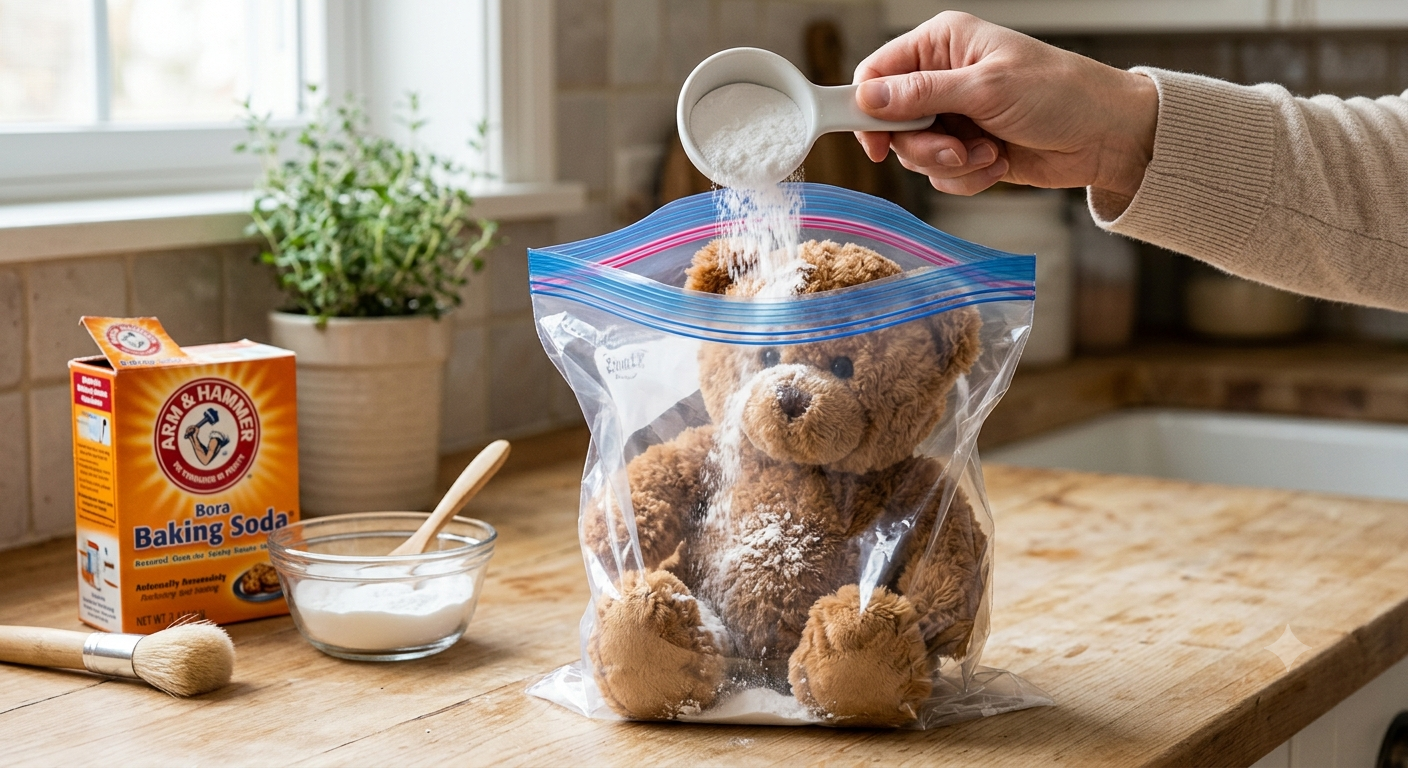
- Bag it up: Place your musty stuffed animal inside a large, clean plastic trash bag or a heavy-duty ziplock bag.
- Add the baking soda: Pour 1/2 cup to 1 full cup of standard baking soda directly over the toy.
- Shake and wait: Seal the bag tightly and give it a vigorous shake so the powder coats the fur entirely. Leave the bag sealed in a dry room for 24 to 48 hours.
- Clean it off: Remove the toy (ideally outside) and shake off the excess powder. Use a soft-bristled brush or a vacuum cleaner with an upholstery attachment on low suction to pull the remaining baking soda out.
How to Remove Musty Smell from Plush Toys Using Sunlight
If the smell is relatively mild, don’t underestimate the power of nature. Ultraviolet (UV) rays from the sun naturally kill odor-causing bacteria, while fresh outdoor air pulls trapped humidity out of the internal polyester stuffing.
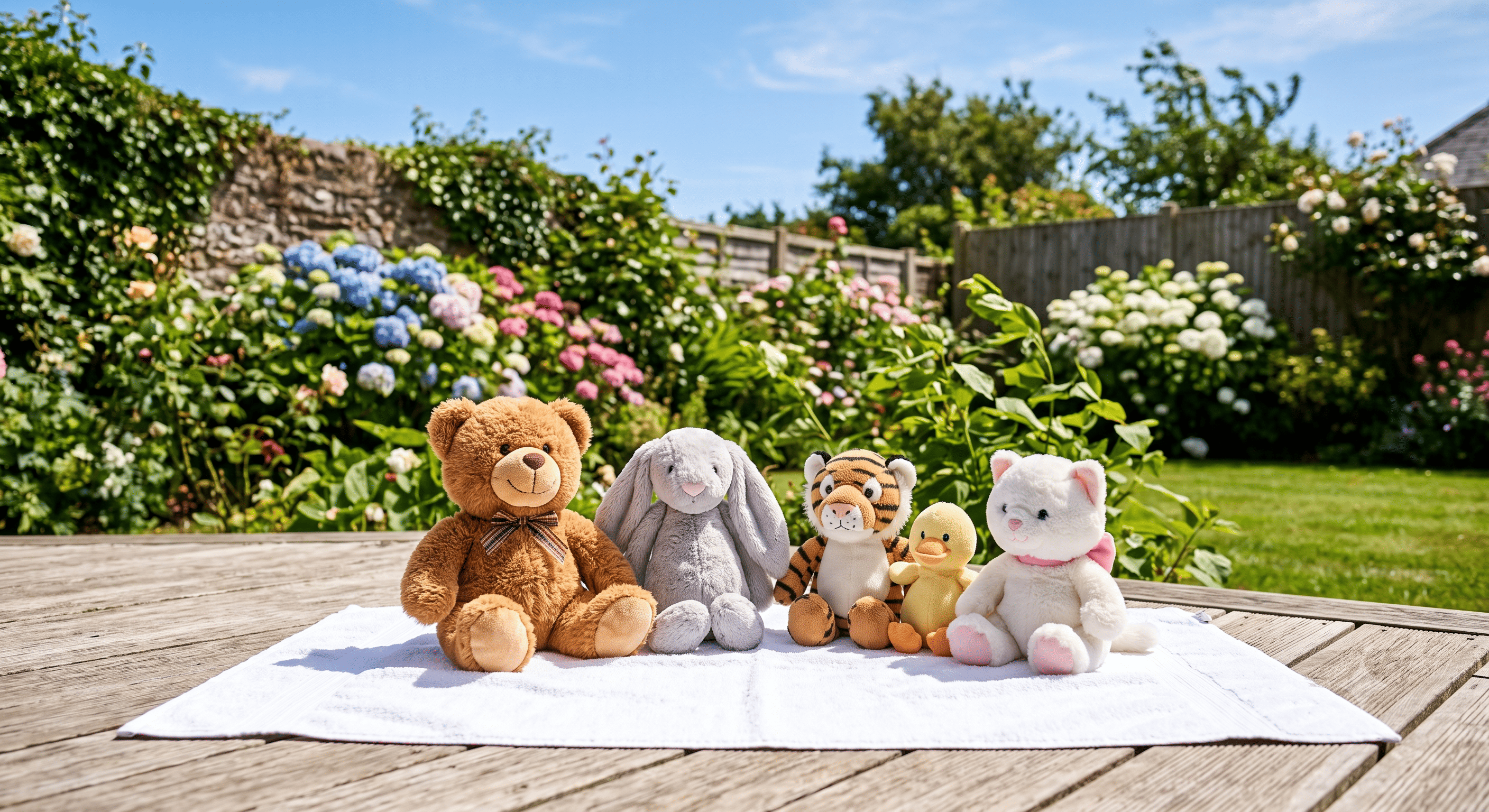
Find a clean spot outside on a dry, breezy day and let your stuffed animal sit in direct sunlight. Make sure to flip it over after a few hours so both sides dry out. A quick warning: Do not leave the toy outside for more than 4 to 6 hours. Prolonged exposure to harsh UV rays can cause severe sun-bleaching, permanently fading the colors.
How to Wash Stuffed Animals with Vinegar to Remove Odor
If you brought home a heavily soiled thrift store find, baking soda might not cut it because the odor has penetrated deep into the internal stuffing. If you have verified via the care label that the toy is machine-washable, a white vinegar soak is your ultimate weapon.
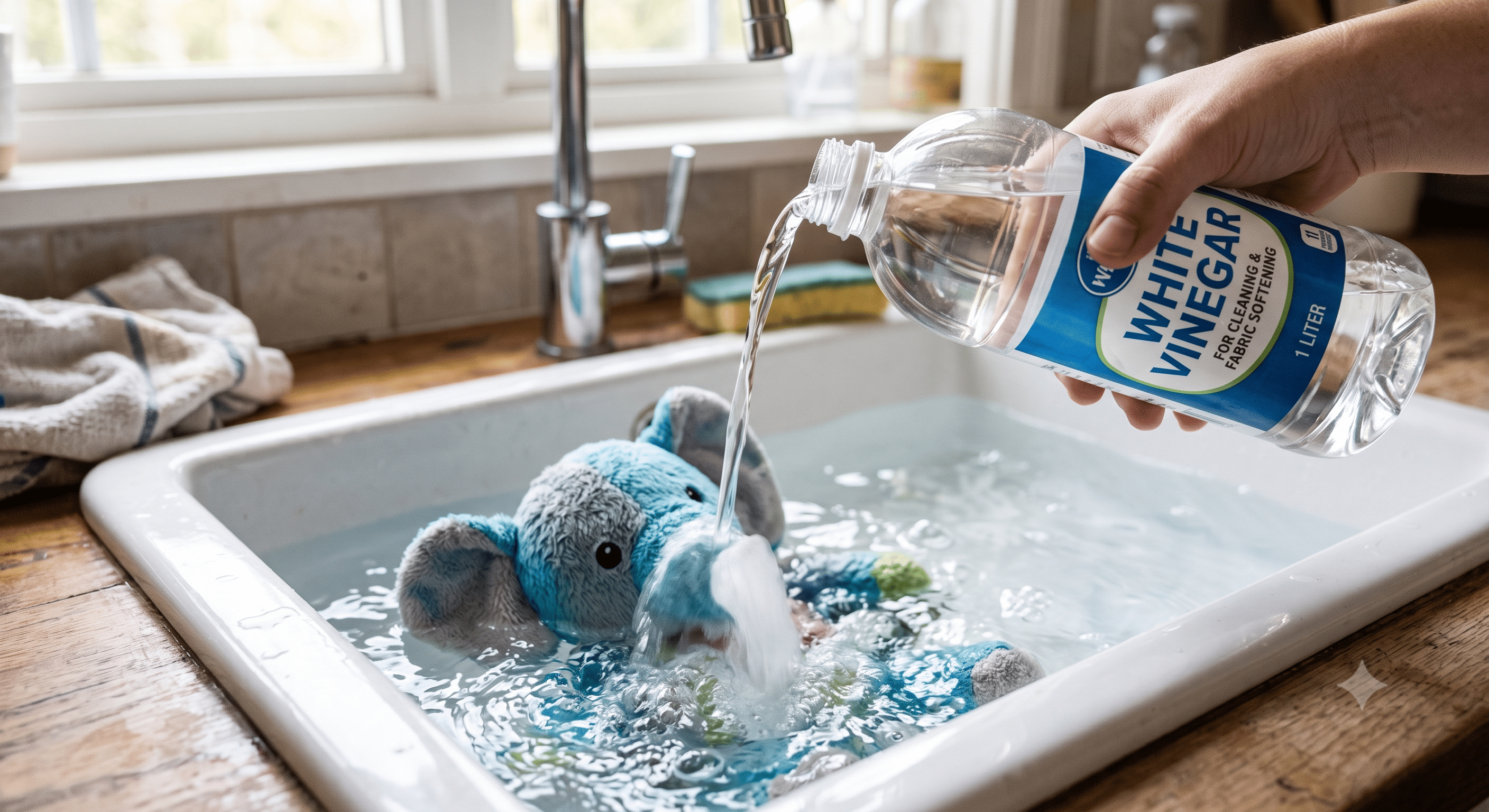
Fill a basin or clean sink with cold water and add one full cup of distilled white vinegar. Submerge the plush toy entirely and squeeze it gently so the vinegar water reaches the core. Let it soak for 30 minutes. The acetic acid will break down and neutralize deep-rooted mildew bacteria and thrift-store smells.
After the soak, you must wash the toy thoroughly to rinse out the vinegar. (See our Ultimate Guide to Cleaning Plush Stuffed Animals for the exact machine settings to use so you don’t melt the fur!).
❌ Common Mistakes When Removing Musty Smell
When trying to desperately get rid of a bad smell, people often panic and ruin their toys. Avoid these common traps:
- Using Febreze or heavy perfumes: Fabric sprays do not kill the bacteria causing the musty smell; they only mask it. Worse, the chemicals leave a sticky residue on faux fur that attracts more dirt.
- Using hot water: Washing a smelly plushie in hot water will permanently melt and mat the synthetic fur fibers.
- Putting it in a hot dryer: Heat bakes the odor into the stuffing permanently and destroys the softness of the toy.
- Over-sun exposure: Leaving a toy in the summer sun for 3 days will completely bleach its vibrant colors.
Stop Musty Smells Before They Start
Musty odors happen for one simple reason: plushies are packed tightly in damp, unventilated spaces like basements or cramped closets. Your collection needs room to breathe! The absolute best way to prevent storage odors is a vertical, open-air organization system.
Frequently Asked Questions
No, baking soda is incredibly safe for almost all fabrics, including synthetic plush fur and vintage cotton. It is non-toxic and mildly abrasive, meaning it pulls out oils and odors without breaking down the fabric dyes or threads.
When stuffed animals are stored in plastic bins, vacuum bags, or cardboard boxes in areas with fluctuating temperatures (like attics or basements), moisture gets trapped inside the polyester stuffing. Without air circulation, this trapped humidity breeds mildew bacteria, creating that signature stale, musty odor.
If using the baking soda dry bath method, it takes at least 24 to 48 hours for the powder to fully absorb the odors. If you use a white vinegar soak followed by a wash, the musty smell is neutralized immediately, though you will smell vinegar until the toy is 100% air-dried.
You should never use a hot dryer to remove odors. Heat will permanently bake the smell into the fibers and melt the synthetic fur. You can, however, use the “Air Fluff” (zero heat) setting with a few dryer sheets to safely freshen up a dusty plushie.
Distilled white vinegar is the safest natural antibacterial agent for washable stuffed animals. For non-washable toys, placing them in direct sunlight for 4 to 6 hours allows UV rays to naturally kill surface bacteria without the use of harsh chemicals.
Not at all. While the toy will smell strongly of vinegar while it is soaking wet, the acetic acid completely evaporates as the fabric dries. Once your plushie is completely air-dried, it will just smell fresh.
“Thrift store smell” is a mix of dust, old detergent, and enclosed storage. First, give the plushie a Baking Soda Dry Bath for 24 hours to absorb surface odors. Then, follow up with a 30-minute cold water and vinegar soak, followed by a gentle hand wash.
About Us & Our Expertise
At My Kawaii Toys, we specialize in plush care, aesthetic storage, and restoration guides based on real collector experience. Having tested countless cleaning methods on delicate and high-value stuffed animals, our goal is to provide safe, proven solutions so your fluffy companions stay in perfect condition for years to come.