Written by:
Sarah – Plush Product Specialist
About this guide:
This guide explains why children become attached to stuffed animals, how plush toys can provide comfort and support imaginative play, and what parents should consider when choosing and caring for a child’s favorite plush companion.
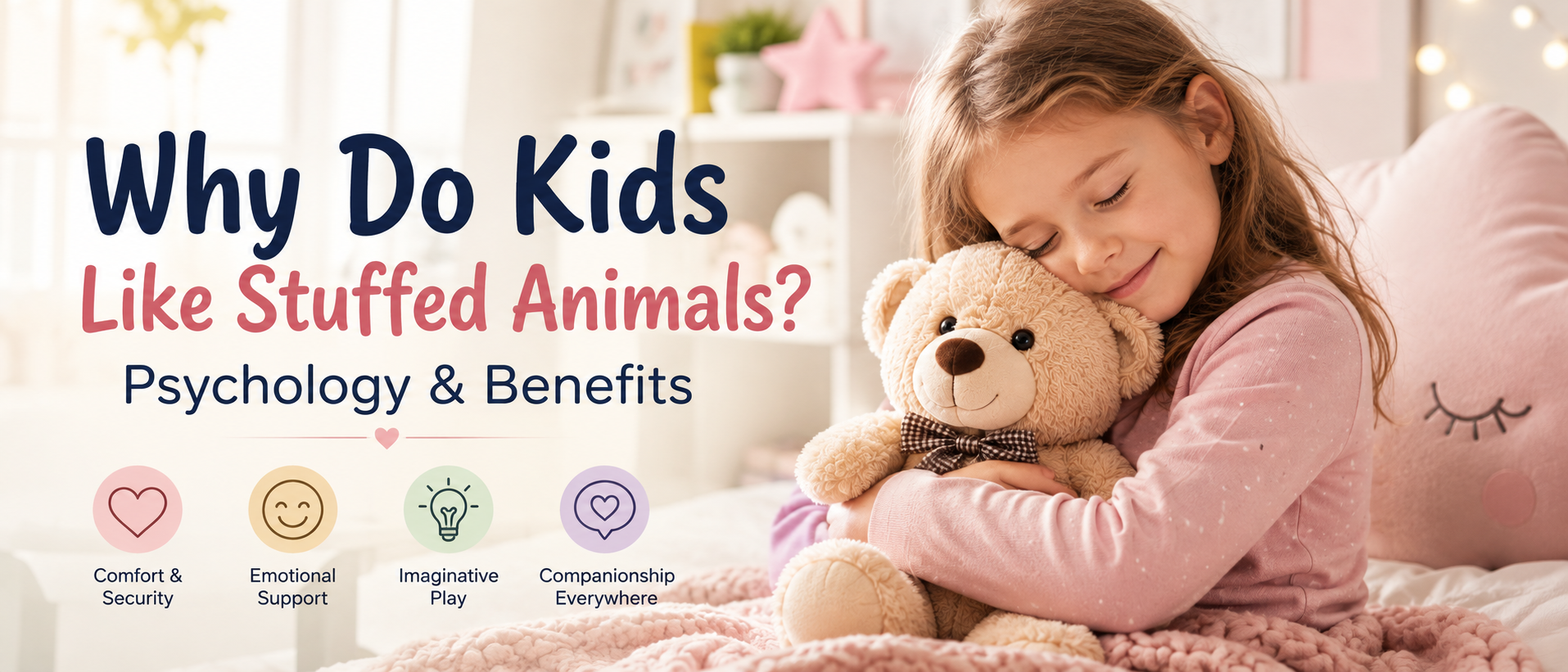
Why Do Kids Like Stuffed Animals? Psychology & Benefits
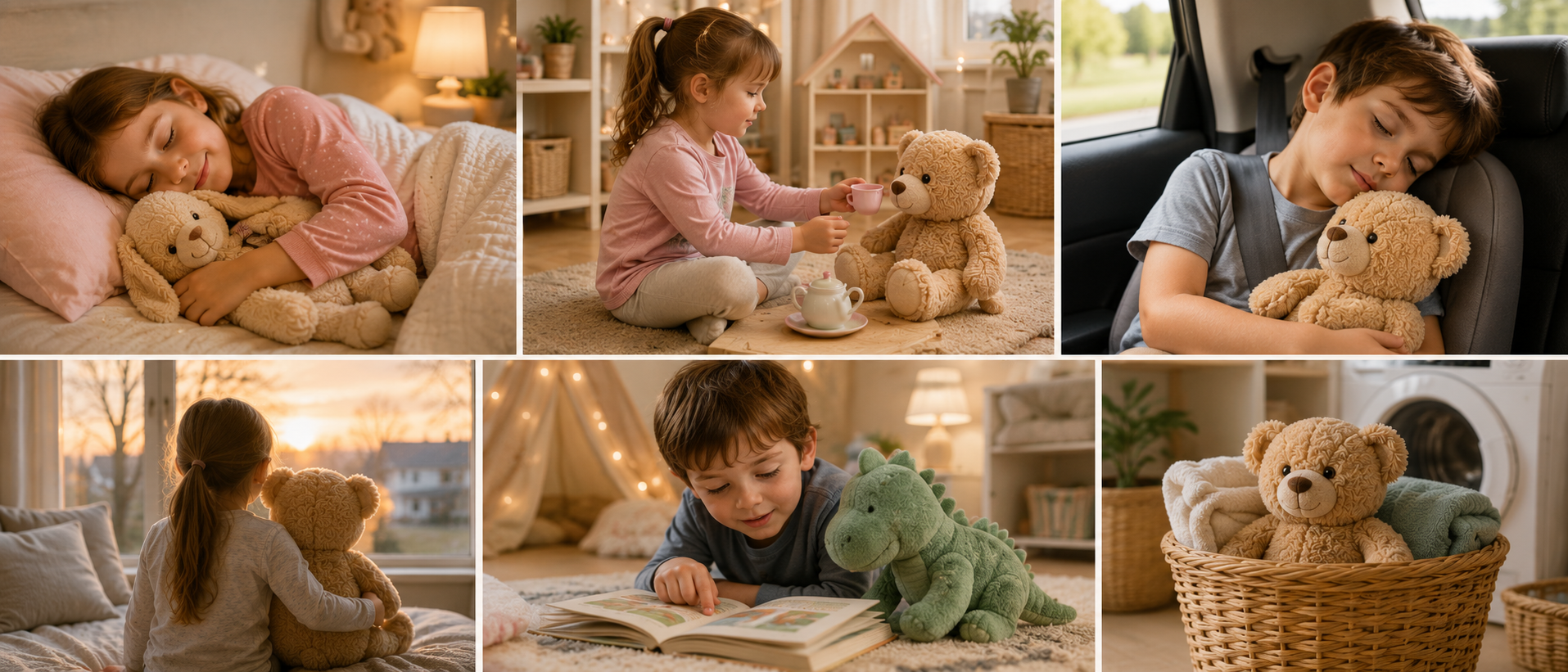
Many children develop a surprisingly strong attachment to stuffed animals. A teddy bear, bunny, dog, cat, dinosaur, or other plush toy can become a constant companion at bedtime, during car rides, at preschool, and even on family trips.
For parents, this attachment can be both adorable and confusing. Why does a child sometimes refuse to leave the house without one particular stuffed animal? And why can an old, well-loved plush seem much more important than a brand-new toy?
The answer is usually a combination of familiarity, sensory comfort, emotional associations, and imaginative play. Over time, a favorite stuffed animal can become part of a child’s daily routines and memories.
Quick Answer:
Kids often like stuffed animals because they are soft, familiar, predictable, and easy to incorporate into pretend play. A favorite plush can provide a sense of comfort during bedtime, travel, separation, or unfamiliar situations while also giving children opportunities to practice storytelling, communication, and caring behaviors.
Why Do Kids Like Stuffed Animals?
There is no single reason every child enjoys stuffed animals. Different children may respond to different qualities, but several common factors help explain why plush toys can become so meaningful.
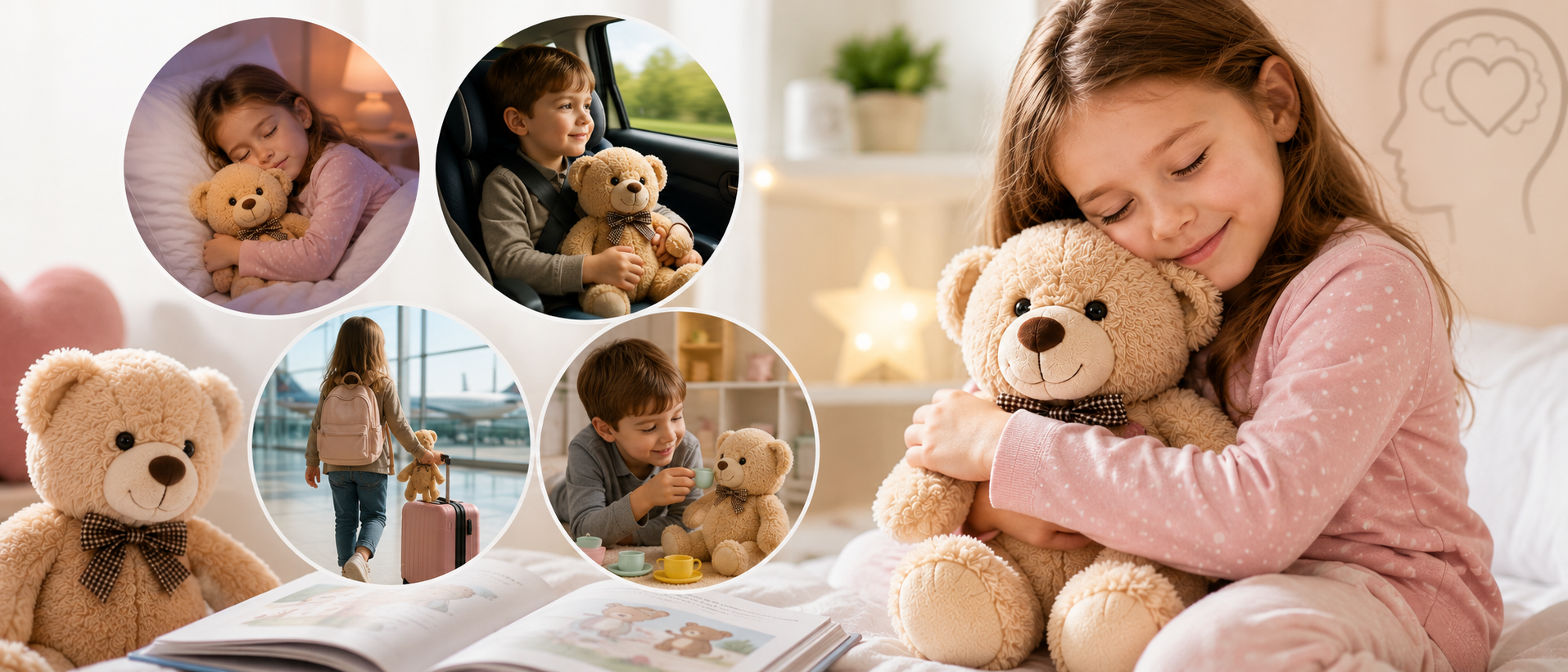
1. They Feel Familiar and Comforting
A stuffed animal can become part of a child’s everyday routine. The same toy may be present during bedtime, story time, naps, or quiet moments with a parent. Repeated exposure in familiar situations can make the toy associated with comfort and security.
2. They Are Soft and Pleasant to Touch
Young children learn about the world through their senses. Soft fabrics, rounded shapes, and squeezable stuffing make plush toys enjoyable to hold. Some children naturally seek out the familiar texture of their favorite toy when they are tired or upset.
3. They Encourage Imaginative Play
A stuffed animal does not have to remain just a toy. Children can give it a name, create a personality, take it on adventures, or pretend that it needs food and sleep. This open-ended design makes plush toys natural tools for pretend play.
4. They Provide Something Predictable
Children regularly move between different environments such as home, school, daycare, and relatives’ houses. A favorite stuffed animal stays the same. Taking a familiar plush into a new environment can make the experience feel more predictable.
What Is a “Transitional Object”?
The term transitional object is associated with British pediatrician and psychoanalyst Donald Winnicott. It describes a familiar object that can have an emotional role as a child becomes increasingly independent from their primary caregiver.
A transitional object might be a blanket, soft toy, teddy bear, or another familiar item. The object does not necessarily have to be special when a child first receives it. Its importance can develop gradually through repeated use.
For example, a child may repeatedly hold the same stuffed animal while falling asleep or during moments when a parent is away. Over time, the toy becomes connected with familiar routines and comforting experiences.
Important:
A strong attachment to a stuffed animal is generally not a reason for parents to worry by itself. Children develop comfort-object attachments in different ways and at different ages.
Why Do Kids Become Attached to One Specific Stuffed Animal?
Some children have many stuffed animals but become deeply attached to just one. They may insist on taking the same bunny, bear, cat, or other plush everywhere they go.
This strong preference is usually connected to familiarity rather than the toy being objectively better than the others. The child may associate that particular plush with bedtime, family routines, comfort, or important memories.
A well-loved stuffed animal may also develop a familiar smell, texture, shape, and appearance after months or years of use. These sensory details can make the old toy feel much more comforting than a brand-new replacement.
Why Is an Old Plush Sometimes More Valuable Than a New One?
The emotional value of a favorite stuffed animal usually comes from repeated experiences rather than its price or appearance. To a child, the toy may represent familiar routines, memories, and comfort.
5 Benefits of Stuffed Animals for Children
Stuffed animals are more than simple comfort toys. Depending on the child’s age and how the toy is used, a plush companion can become part of everyday play, routines, and social learning.
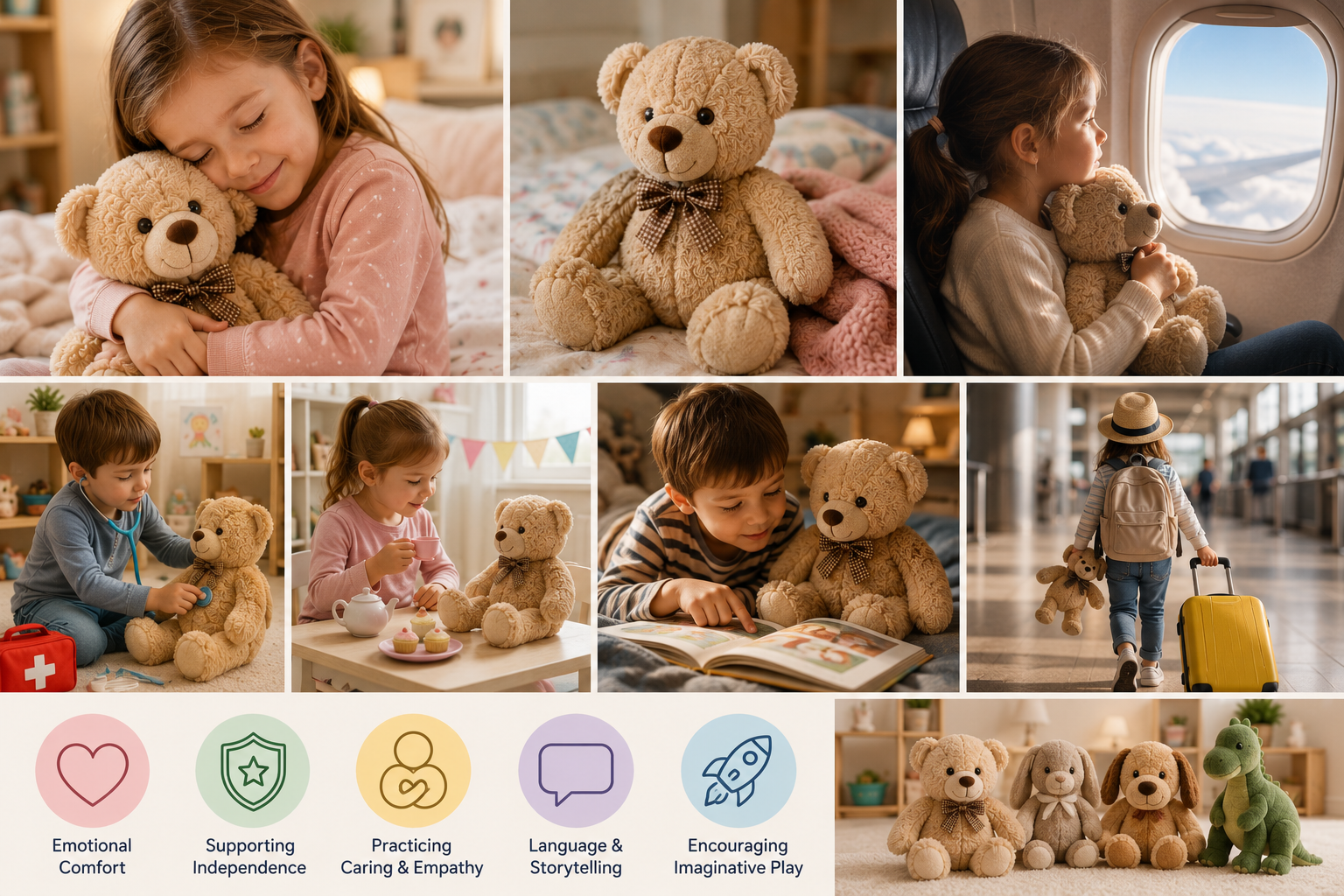
1. Emotional Comfort
A familiar stuffed animal can provide a sense of comfort when a child is tired, upset, nervous, or experiencing an unfamiliar situation. Holding a familiar object can become part of a child’s normal way of settling down.
2. Supporting Independence
As children become more independent, they spend more time away from parents and familiar surroundings. A favorite plush can provide continuity when a child goes to preschool, visits relatives, travels, or sleeps in a different room.
3. Practicing Caring and Empathy
Children often treat stuffed animals as if they have feelings and needs. They may feed a teddy bear, give a bunny a blanket, or comfort a toy that is “sad.”
Through this type of pretend caregiving, children can explore social roles and practice caring behaviors in a simple, familiar setting.
4. Language and Storytelling Practice
Stuffed animals can become characters in stories and conversations. A child may give a plush a name, describe what it is doing, or create an imaginary conversation between several toys.
These activities give children opportunities to practice vocabulary, storytelling, conversation, and expressing their ideas through play.
5. Encouraging Imaginative Play
A teddy bear can become a doctor, student, superhero, pet, family member, or travel companion. The same toy can take on completely different roles depending on the child’s imagination.
Because plush toys have no single “correct” way to play with them, they can support open-ended pretend play and storytelling.
Parent Tip: Let Your Child Lead the Story
You do not need to turn plush play into a structured lesson. Simple questions such as
“What is your bear doing?” or
“Does your bunny need anything?”
can encourage a child to explain their ideas and develop an imaginary story.
Why Do Kids Sleep With Stuffed Animals?
Bedtime is one of the most common situations where children become attached to stuffed animals. A child may want the same plush beside them every night before they can settle down.
One reason is familiarity. Bedtime usually follows a predictable routine, and having the same stuffed animal nearby can become another familiar part of that routine.
The soft texture may also make the toy pleasant to hold while the child is relaxing. For some children, having a familiar plush nearby can make sleeping alone or being away from home feel less unfamiliar.
This repeated association explains why a child may become especially attached to one plush at bedtime. The toy is not necessarily “magical”; it has simply become part of a familiar pattern.
How to Choose a Safe Stuffed Animal for Kids
Because children often hug, carry, and play closely with their favorite stuffed animals, parents should consider more than appearance. Age suitability, construction, materials, and care instructions all matter.
1. Check the Recommended Age
Always check the manufacturer’s recommended age before giving a stuffed animal to a child. Toys intended for older children may contain small accessories or other features that are not appropriate for younger children.
2. Check Eyes, Buttons, and Decorative Parts
Inspect the eyes, nose, buttons, ribbons, clothing, and other decorative features. For younger children, securely stitched or embroidered details can be easier to inspect than detachable components.
3. Inspect Seams and Stitching
Look for loose threads, damaged seams, holes, or areas where stuffing could escape. Pay particular attention to parts that receive frequent pulling, such as ears, arms, legs, tails, and attached accessories.
4. Choose Comfortable Materials
Children may press a favorite plush against their face or skin for long periods. Look for fabric that feels comfortable and does not shed excessively. Always follow the manufacturer’s material and care information.
5. Consider How Easy It Is to Clean
A favorite plush may spend time on beds, floors, sofas, cars, and outdoor surfaces. A washable design can make regular care easier, but parents should always follow the manufacturer’s cleaning instructions.
Important safety note:
For babies and young infants, parents should follow current safe-sleep recommendations and keep stuffed animals and other loose soft objects out of the infant’s sleep space. Always check the manufacturer’s recommended age before using a plush toy with a young child.
Simple Stuffed Animal Safety Checklist
- Check the manufacturer’s recommended age.
- Inspect eyes, noses, buttons, ribbons, and accessories.
- Look for damaged seams or exposed stuffing.
- Choose comfortable and durable materials.
- Follow the manufacturer’s washing instructions.
- Regularly inspect well-loved plush toys for damage.
- Follow age-appropriate safe-sleep guidance for infants.
Want to learn more about plush materials?
Read our guide to
the best fabrics for plushies
to understand what to look for when choosing a soft and durable stuffed animal.
How to Choose a Stuffed Animal by Age
The best stuffed animal depends on the child’s age, developmental stage, and how the toy will be used. A plush that works well for a preschooler may not be appropriate for a baby, while older children may care more about a character, animal, size, or personal interest.
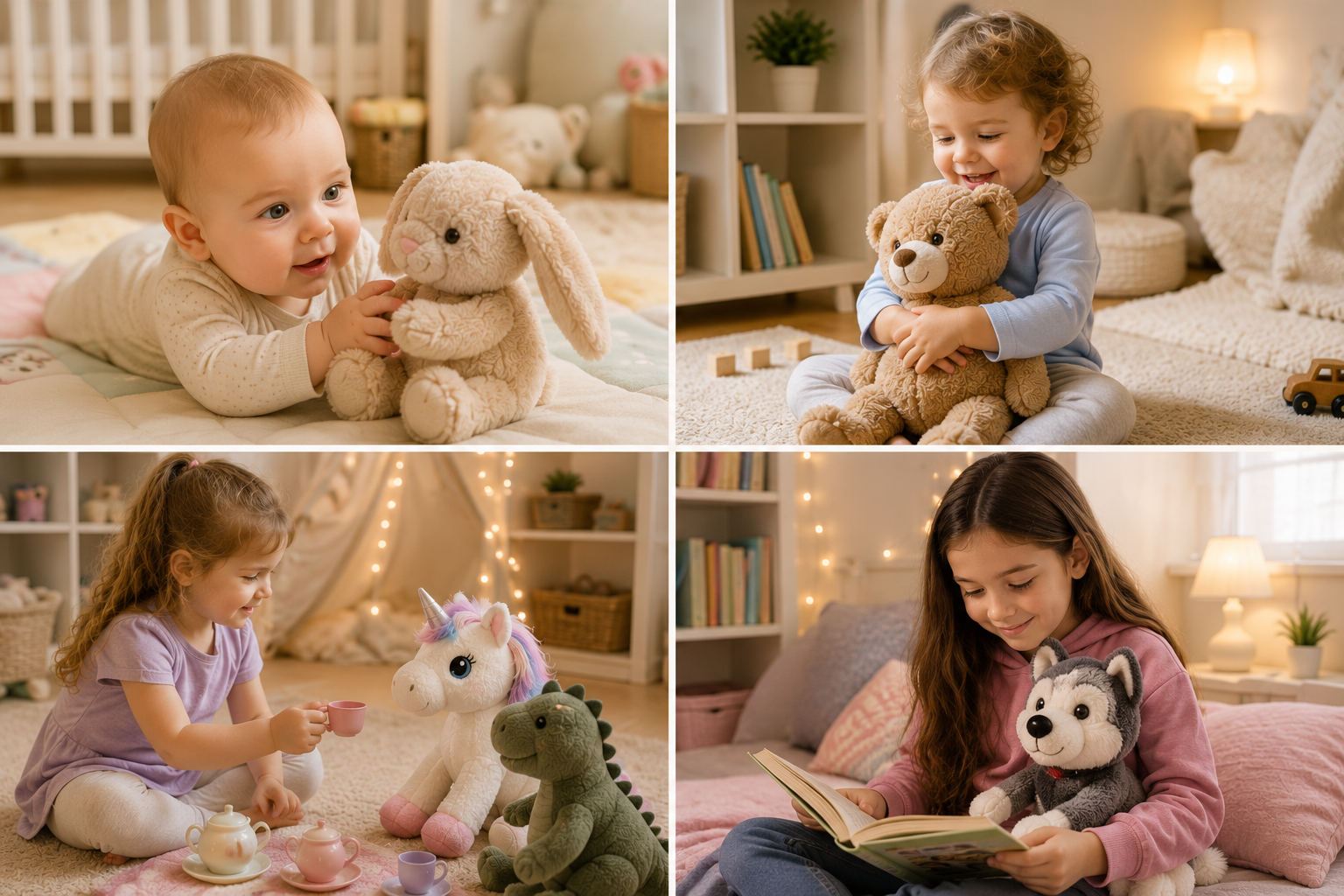
Babies: 0–12 Months
For babies, safety should be the primary consideration. If a plush toy is used during supervised play, choose a simple design with securely attached features and durable stitching.
Stuffed animals and other soft objects should not be placed in an infant’s sleep space. Follow current safe-sleep recommendations from your pediatrician and relevant child-safety authorities.
Toddlers: 1–3 Years
Toddlers may begin developing strong preferences for particular comfort objects. A small or medium-sized plush can become a familiar companion during bedtime, travel, or daily routines.
- Soft and comfortable fabric
- Securely attached features
- Durable seams
- Clear cleaning instructions
Preschoolers: 3–5 Years
Preschoolers often become more interested in pretend play. Animals, dinosaurs, fantasy creatures, and character-based plush toys can become characters in stories and imaginary games.
At this stage, consider toys that match the child’s interests while remaining appropriate for their age and intended use.
School-Age Children: 6+ Years
Older children often have more specific preferences. They may choose a plush based on a favorite animal, character, color, hobby, or personality.
At this age, letting the child participate in choosing the stuffed animal can make the toy feel more personal and meaningful.
Quick Age-Based Buying Guide
| Age | Main Priority | What to Look For |
|---|---|---|
| 0–12 months | Safety & supervised play | Simple, securely constructed design |
| 1–3 years | Comfort & familiarity | Soft, durable, easy to clean |
| 3–5 years | Pretend play | Character and animal designs |
| 6+ years | Personal preference | Favorite characters, animals, sizes, and interests |
How to Keep a Child’s Favorite Stuffed Animal Clean
A favorite stuffed animal may travel from the bedroom to the car, daycare, sofa, and outdoor play areas. Regular care can help keep the toy comfortable and in good condition.
The correct cleaning method depends on the toy’s materials and construction, so always check the manufacturer’s care instructions first.
1. Check the Care Label
Some plush toys are machine washable, while others should only be spot cleaned. Following the manufacturer’s instructions helps protect the fabric, filling, stitching, and shape.
2. Spot-Clean Small Stains
For a small stain, gently clean the affected area with a soft cloth and an appropriate cleaning solution. Avoid soaking the entire toy unless the manufacturer says it is safe.
3. Wash According to the Instructions
If machine washing is allowed, follow the recommended cycle and temperature. A laundry bag or pillowcase may help reduce wear when appropriate for the specific toy.
4. Dry the Plush Thoroughly
Make sure the stuffing is completely dry before the child uses the toy again. Follow the manufacturer’s drying instructions rather than assuming that every plush can safely be tumble dried.
What If a Child Loses Their Favorite Stuffed Animal?
Losing a favorite plush can be surprisingly upsetting for a child. Avoid dismissing the reaction by saying that it is “only a toy.” The stuffed animal may represent familiar routines, memories, and comfort.
Start by helping the child search calmly. Check the places where the toy was last used, including the car, school, daycare, bedroom, and other familiar locations.
If the original cannot be found, allow the child to participate in choosing another comfort object. A new plush may not immediately replace the old one, but familiarity can develop gradually.
Helpful idea:
If your child has an irreplaceable favorite plush and an identical version is still available, keeping a backup can be useful. However, a replacement may not feel exactly the same to the child because the original carries its own memories and familiar texture.
Frequently Asked Questions About Kids and Stuffed Animals
Is it normal for older children to sleep with stuffed animals?
Yes. Many children continue to enjoy sleeping with a favorite stuffed animal as they get older. The toy may remain a familiar source of comfort even as its role changes over time.
Why does my child prefer one specific stuffed animal?
A particular plush can become meaningful because of its familiar texture, smell, appearance, and the memories associated with it. Repeated use can make that toy feel more comforting than a new one.
Can stuffed animals help with imaginative play?
Yes. Children can turn stuffed animals into characters and use them to create stories, conversations, pretend situations, and caring scenarios.
How many stuffed animals should a child have?
There is no universal number. More important considerations are whether the toys are age-appropriate, safe, clean, and in good condition.
Are stuffed animals safe for babies?
For babies, parents should follow current safe-sleep recommendations and avoid placing stuffed animals and other loose soft objects in an infant’s sleep space. Always check the manufacturer’s recommended age for a toy.
How often should a child’s favorite stuffed animal be washed?
There is no single schedule for every plush toy. Toys that are frequently carried around or exposed to food and outdoor environments may need cleaning more often. Follow the care label and spot-clean when necessary.
Why do children talk to their stuffed animals?
Talking to a stuffed animal is a common form of pretend play. Children may use plush toys to practice conversations, create stories, explore emotions, and act out familiar social situations.
The Bottom Line: Why Do Kids Love Stuffed Animals?
For many children, a stuffed animal is much more than a soft toy. A favorite plush can become a familiar source of comfort, a companion for pretend play, and a way for children to explore stories, emotions, and caring behaviors.
The best choice is not necessarily the biggest or most expensive plush. Look for a toy that is appropriate for the child’s age, securely constructed, comfortable to handle, and easy to care for.