KAWAII PLUSH CARE GUIDE
Written by: My Kawaii Toys Editorial Team
Research Process: Our team researches plush toy materials, cleaning methods, and fabric care practices. This guide combines plush toy maintenance knowledge with publicly available health guidance about head lice prevention to help families protect comfort toys without unnecessary damage.
Discovering head lice can make many parents worry about everything their child has touched — clothes, bedding, pillows, and especially their favorite stuffed animals.
The good news is that stuffed animals are usually not the main concern during a lice situation. Head lice are specialized parasites that depend on human hair and scalp conditions, rather than household fabrics, to survive.
Instead of throwing away beloved teddy bears or washing every toy in extreme heat, parents can use simple cleaning and isolation methods to reduce concerns while protecting plush fabrics.
Quick Answer:
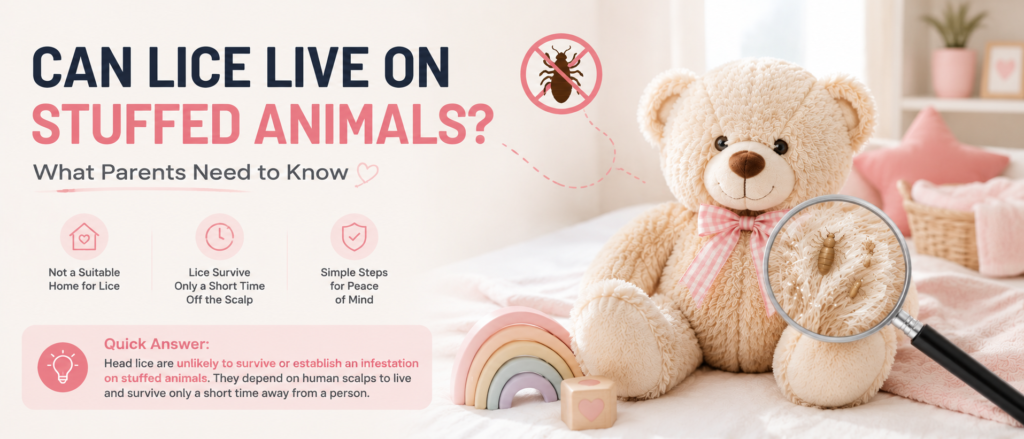
Can lice live on stuffed animals? Head lice are unlikely to survive or establish an infestation on stuffed animals. They are adapted to live on human scalps, where they receive warmth and access to blood meals. If a louse falls away from its human host, it usually survives only a short time. Simple precautions such as isolating recently used plush toys or following recommended cleaning methods are usually sufficient.
Why Head Lice Do Not Normally Live on Stuffed Animals
Many people worry that stuffed animals can become a long-term hiding place for lice. However, head lice are very different from insects such as bed bugs or fleas that commonly live in household environments.
Head lice are highly specialized parasites that have adapted to human scalp hair. Their survival depends on staying close to a person rather than living on fabrics, furniture, or toys.
Why Plush Toys Are Not a Suitable Home for Head Lice
- They need human hair: Head lice claws are designed to grip human hair strands, not plush fabric fibers.
- They need a human host: Lice feed on blood from the scalp and cannot continue their normal life cycle without access to a person.
- Fabric conditions are different: A stuffed animal does not provide the warmth and environment found near the human scalp.
How Long Can Lice Live on Stuffed Animals?
One of the most common questions parents ask is: “How long do lice live on toys?”
Unlike the human scalp, stuffed animals cannot provide the conditions lice need for long-term survival. Public health guidance generally emphasizes treating the person with lice first, while household items require only practical cleaning steps.
For toys that have had recent contact with an affected person’s head, many families choose temporary isolation or gentle cleaning as an additional precaution.
How to Clean Stuffed Animals After Lice Exposure (Without Ruining Them)
If your child has head lice, there is usually no need to throw away favorite stuffed animals. The goal is not to destroy the toy, but to reduce any possible risk while preserving the fabric quality.
Many plush toys contain delicate materials such as Minky, faux fur, embroidered details, sound modules, or glued decorations. Excessive heat and aggressive washing can permanently damage these fabrics.
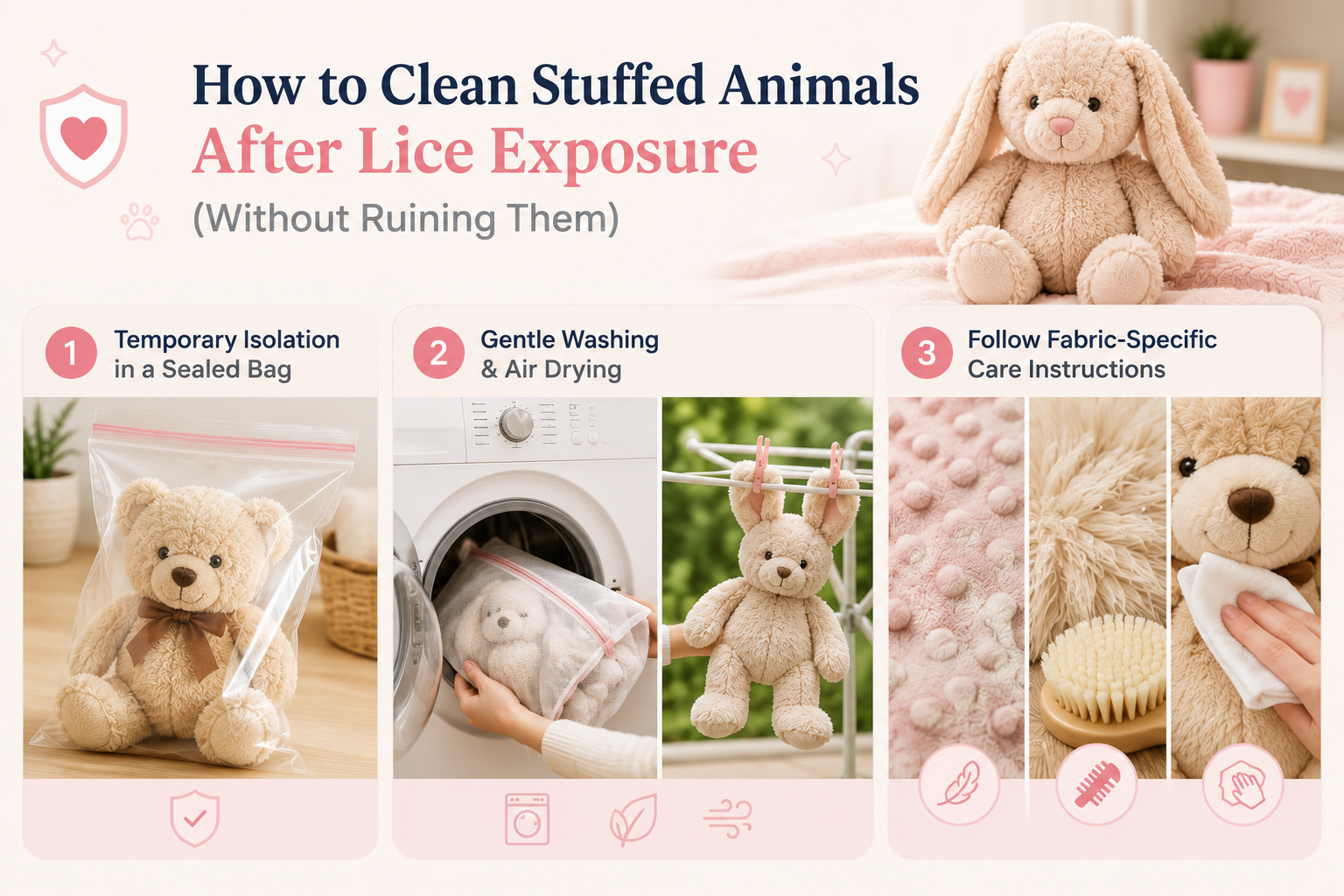
Method 1: Temporary Isolation in a Sealed Bag
For delicate or sentimental plush toys, temporary isolation is often the easiest option. Place the stuffed animal inside a clean plastic bag, seal it, and keep it separated for several days. This method avoids heat damage, protects soft fibers, and provides extra peace of mind for families dealing with a lice situation.
Method 2: Gentle Washing and Air Drying
If the plush toy is machine washable, a gentle cleaning cycle can help remove dirt, oils, and surface debris.
- Place the toy inside a laundry bag or pillowcase.
- Use cold water or a delicate cycle.
- Avoid high-temperature dryers.
- Allow the plush toy to completely air dry.
This approach is especially suitable for durable polyester plush toys that do not contain electronic parts.
Method 3: Follow Fabric-Specific Care Instructions
Different plush materials react differently to cleaning. A luxury Minky plush toy requires different care compared with cotton dolls or long-pile faux fur animals.
- Minky fabric: Use gentle washing and avoid heat.
- Faux fur: Brush fibers gently after drying to restore softness.
- Electronic plush toys: Avoid soaking and clean the surface only.
Proper fabric care helps maintain softness and prevents problems such as matting, shedding, and fiber damage.
Best Ways to Clean Plush Toys After Lice: Comparison Guide
Use this simple comparison to choose the safest approach depending on your stuffed animal type.
| Method | Best For | Fabric Risk | Recommended? |
|---|---|---|---|
| Bag Isolation | Delicate plushies, collectible toys | Very Low | Excellent choice |
| Cold Wash + Air Dry | Machine washable toys | Low | Recommended |
| High Heat Dryer | Older low-value fabrics | High | Avoid for premium plush |
| Boiling Water | Not recommended | Very High | Avoid |
Can Lice Live on Teddy Bears, Blankets, or Other Items?
One of the biggest concerns parents have is whether lice can spread through household objects. Understanding which items actually matter can help you avoid unnecessary cleaning.
| Item | Can Lice Live There? | What To Do |
|---|---|---|
| Human Hair | Yes | Treat according to recommended lice treatment guidance. |
| Stuffed Animals | Unlikely | Use simple isolation or gentle cleaning if recently used. |
| Pillows & Bedding | Limited survival away from a host | Wash regularly used bedding following care instructions. |
| Clothing | Short-term concern only | Wash commonly worn items normally. |
| Carpets & Furniture | Not a typical infestation location | Normal household cleaning is usually enough. |
Do You Need to Wash Every Stuffed Animal After Lice?
A common mistake is believing every stuffed animal in the house must be immediately washed or thrown away.
In most situations, the priority is treating the person who has lice and cleaning items that had close, recent contact with the head.
A teddy bear sitting on a shelf or a decorative plush toy across the room usually does not require the same attention as a pillow or toy regularly used during sleep.
Why Plush Fabric Quality Matters During Cleaning
Not all stuffed animals handle cleaning equally. Cheap plush toys made with low-density fabrics may become rough, flat, or damaged after repeated washing.
High-quality plush materials such as dense Minky fabric are designed to maintain softness through regular care. Their smooth microfiber surface helps reduce problems such as excessive shedding and fiber damage.
For families who use stuffed animals as everyday comfort companions, choosing durable fabrics makes cleaning easier and helps toys stay soft for years.
Learn what makes a plush toy soft, durable, and easy to care for.
Looking for Easy-Care Comfort Plushies?
Explore soft plush companions made with quality fabrics designed for everyday hugs, gentle cleaning, and long-lasting comfort.
Frequently Asked Questions
Head lice are adapted to survive on human scalps rather than household fabrics. Stuffed animals are not a typical environment where lice establish an infestation. If a toy had recent contact with an affected person’s head, simple isolation or gentle cleaning can provide additional reassurance.
Head lice depend on human hosts and do not survive well away from the scalp. Their survival time outside a person is limited, which is why cleaning or temporarily separating recently used items is usually considered a practical precaution.
No. Throwing away favorite stuffed animals is usually unnecessary. Most plush toys can be safely kept by using simple cleaning steps or temporary isolation when needed.
Not necessarily. Focus on items that had close and recent contact with the person’s head. Decorative toys or stuffed animals stored away from the affected person generally require less attention.
Head lice eggs are normally attached to human hair close to the scalp. A stuffed animal does not provide the same conditions as human hair and scalp, making it an unsuitable place for the normal lice life cycle.
Check the care label first. For washable teddy bears, use a gentle wash cycle and air drying. For delicate plush toys, temporary isolation or surface cleaning may be a better option.
High heat can damage many synthetic plush fabrics. Materials such as Minky, faux fur, and polyester fibers may lose softness or become permanently damaged when exposed to excessive heat.
High-quality Minky plush toys are known for their smooth microfiber texture and durability. When properly cared for, they can maintain softness through regular cleaning routines.
Sources & References
This article is based on general plush toy care knowledge and publicly available health information about head lice prevention and treatment.
- CDC guidance on head lice prevention and treatment.
- American Academy of Pediatrics recommendations regarding head lice management.
- General textile care recommendations for synthetic plush fabrics.
Final Thoughts: Do You Need to Worry About Lice on Stuffed Animals?
For most families, there is no reason to panic or throw away beloved stuffed animals after a lice discovery. Head lice are primarily a human scalp issue, not a plush toy problem. By focusing on treating the affected person and using sensible cleaning practices for recently used items, you can protect both your family and your favorite comfort toys. With proper care, quality plush toys can remain soft, safe, and comforting for many years.