About Our Plush Expertise: At My Kawaii Toys, we believe that the comfort of a plush toy is entirely defined by what goes into it. This guide is designed to help collectors, parents, and comfort-seekers understand plush toy materials and the difference between premium plushies and mass-produced synthetic alternatives.
How We Evaluate Plush Quality: We evaluate stuffed animals based on fabric softness, stitching quality, filling density, washability, and long-term durability to help you find the safest and coziest companions.
When you come home after an exhausting day and sink into a giant, fluffy stuffed animal, the immediate sense of comfort feels magical. But behind that buttery-soft feeling isn’t magic—it’s material science.
Have you ever wondered why some plush toys feel like rough carnival prizes that clump up after one wash, while premium stuffed animals feel like hugging a cloud? If you want to know exactly what is inside stuffed animals, and how to spot a high-quality, safe companion, you are in the right place. Let’s dive deep into the fabrics, stuffings, and safety details that make up the perfect stuffed animal.
The Outer Shell: Exploring Plush Toy Materials
The “skin” of a stuffed animal dictates your entire sensory experience. Here are the three most common fabrics used in the industry today:
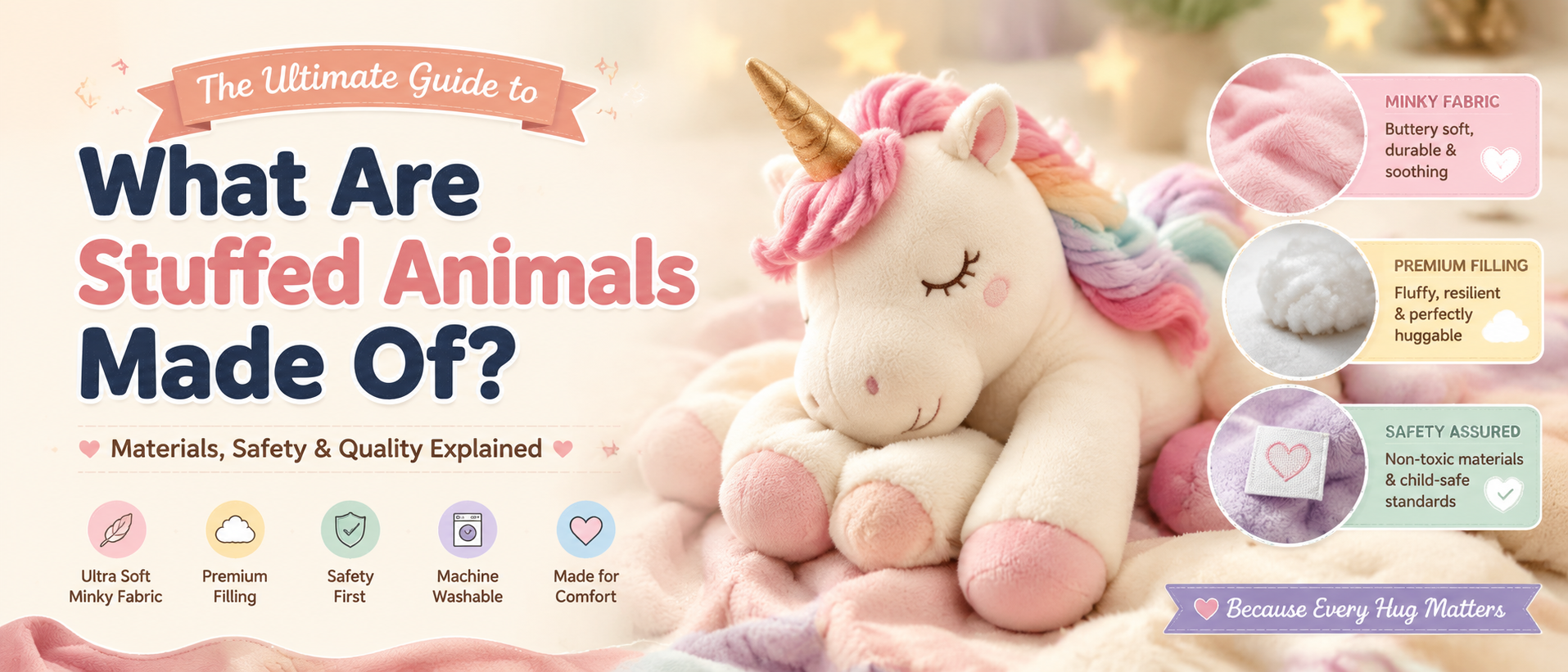
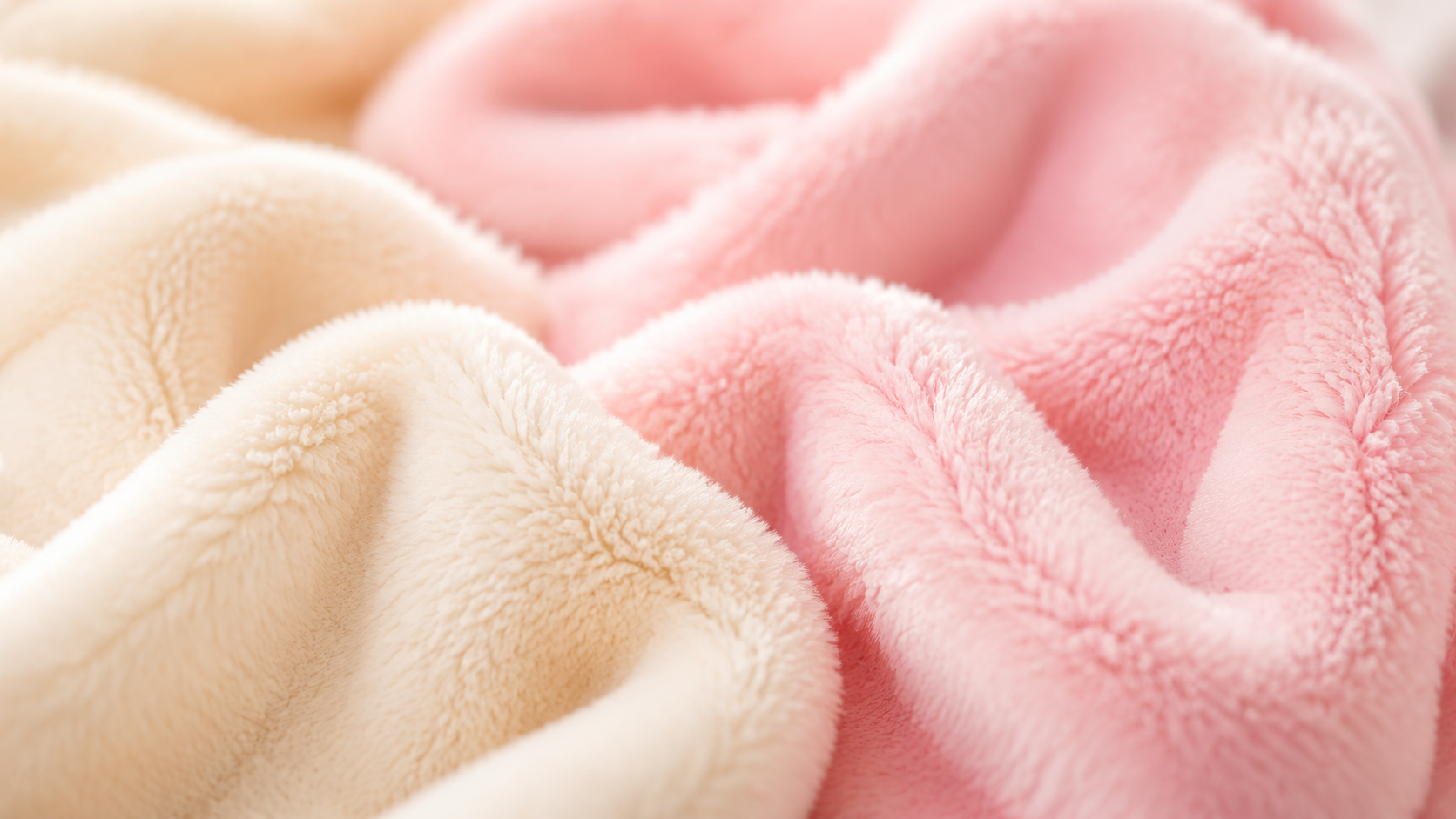
- Minky Fabric: Minky is one of the most popular premium fabrics used in modern plush toys because of its incredible softness and durability. It feels buttery-smooth and is highly soothing to touch, making it the softest plush fabric for high-end comfort objects like our giant unicorns.
- Cotton & Fleece: Often used in vintage or handmade stuffed animals. While natural and breathable, cotton doesn’t always offer that “squishy” tactile softness and can feel a bit rough against the skin over time.
- Faux Fur: Found on highly realistic animal toys. While it looks great on a display shelf, faux fur has long fibers that easily shed, trap dust, and become matted if washed improperly, making it less ideal for sleeping.
Minky vs Polyester Plush Fabric: What’s the Difference?
A common question buyers have is: “Isn’t minky just polyester?”
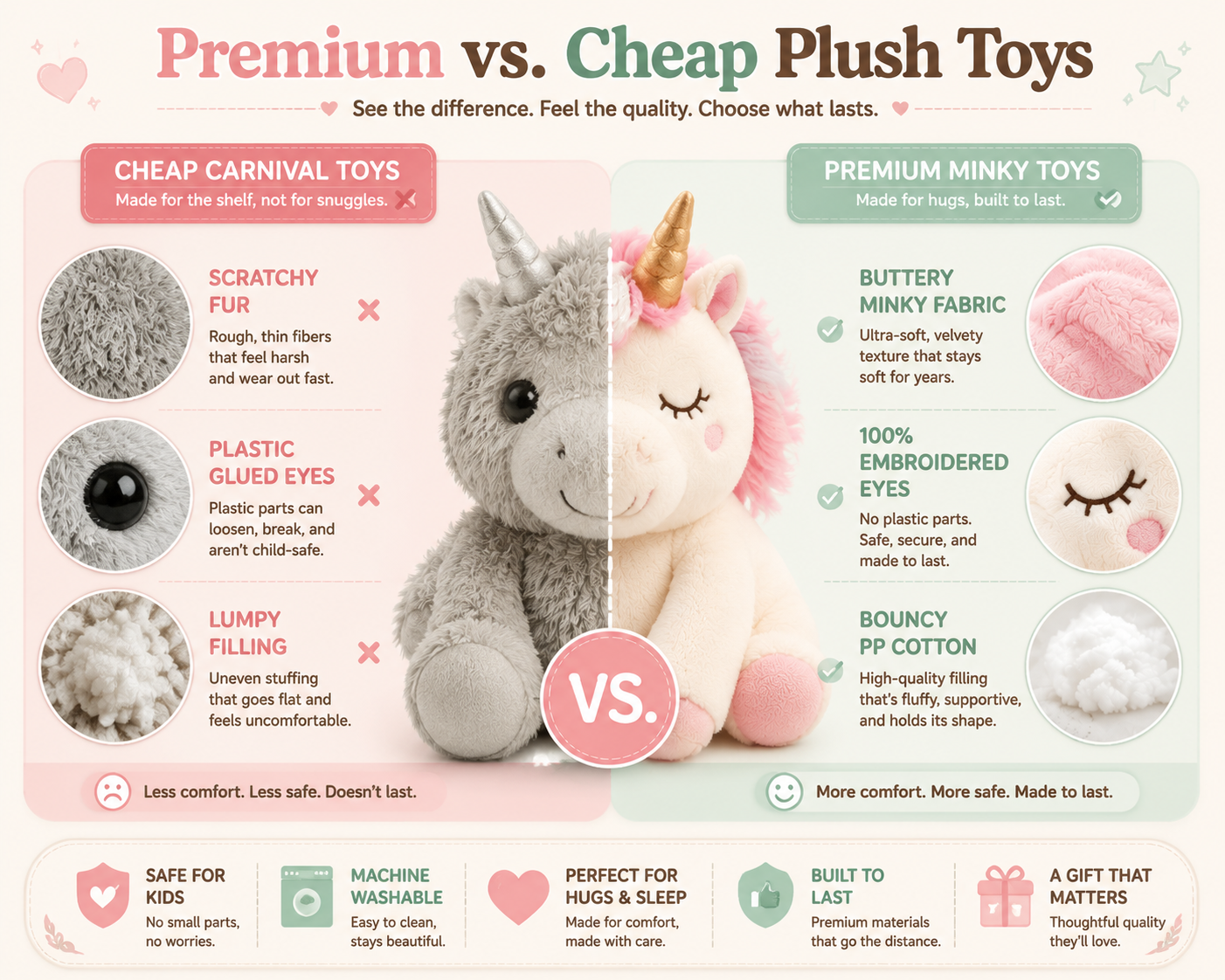
Technically, yes. Minky is made from 100% polyester fibers. However, the difference lies in how it is manufactured. Standard, cheap polyester plush (often found in claw machine prizes) uses thin, loosely woven fibers that feel scratchy and pill easily. Minky, on the other hand, is knit from ultra-fine microfiber threads that are densely packed and sheared to a uniform length. This specific manufacturing process gives Minky its signature luxurious, silky-soft texture that is far superior to standard polyester.
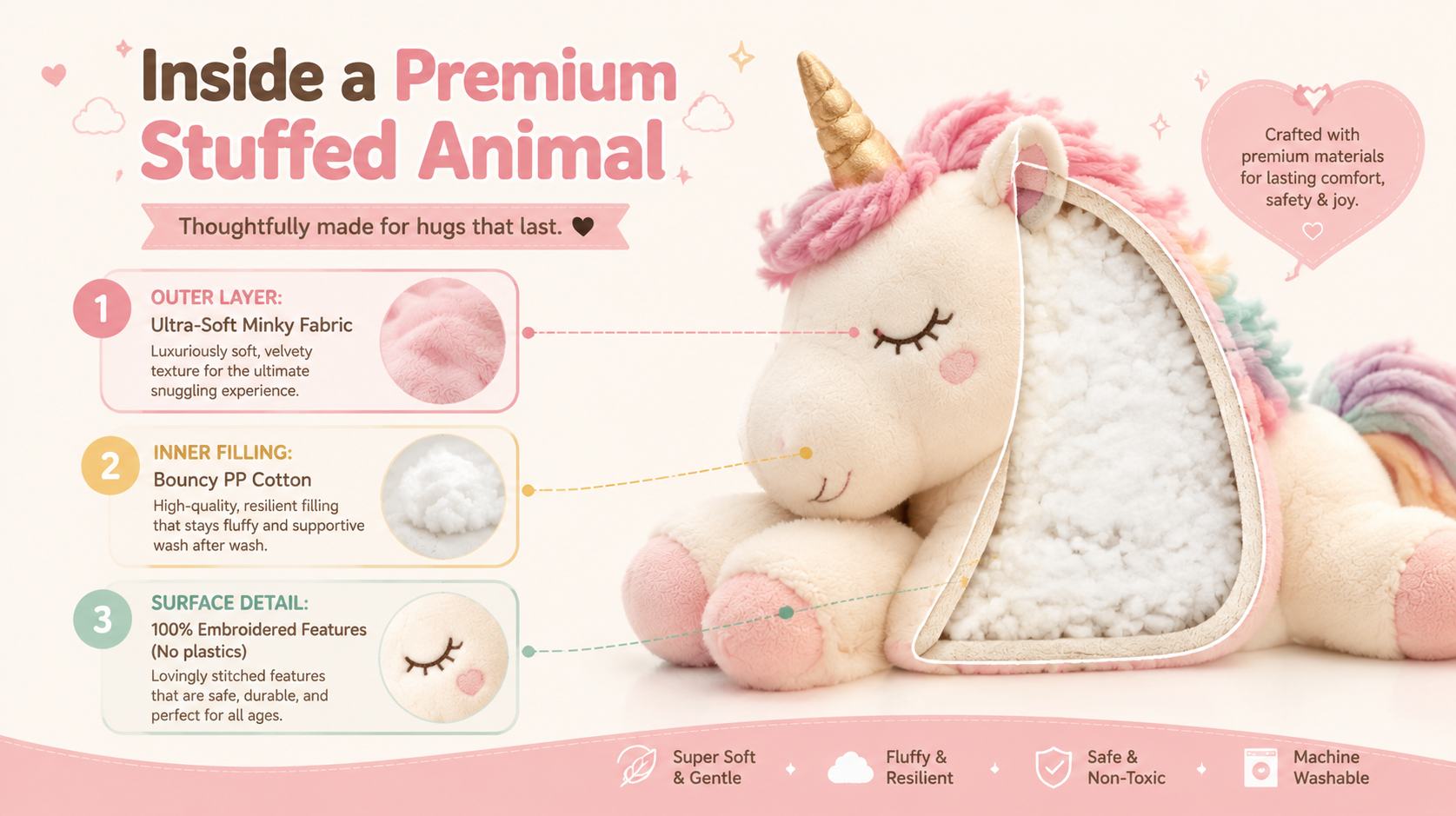
What’s Inside? The Truth About Stuffed Animal Filling
The inside of a stuffed animal is what gives it its shape, weight, and huggability. When we ask what stuffed animals are made of, the filling is where you see the biggest difference in quality.
- High-Grade PP Cotton (Polypropylene): The standard stuffed animal filling for modern premium toys. PP cotton is lightweight, washable, and commonly used in plush toys because it helps maintain softness and shape without clumping easily. This gives toys like a giant capybara plush their delightful “slow-rebound” squishiness.
- Recycled Scrap Fill: Used in cheap toys. It feels dense, heavy, and will often turn into hard, uncomfortable lumps the first time you wash it.
- Weighted Pellets (Micro-Glass or Poly): Ever wonder why some toys feel pleasantly heavy? Weighted pellets are sewn into the base or belly of the plush. This added weight provides gentle pressure, a sensory experience that many find naturally grounding.
Which Plush Material Is Best For You?
Knowing the best material for stuffed animals depends entirely on who is using it and for what purpose. Use this simple guide to make your buying decision:
| Your Need / Persona | Recommended Materials | Why It Works |
|---|---|---|
| Sleeping & Cuddling | Minky Fabric + PP Cotton | Provides maximum squishiness and a smooth, non-scratchy surface against the skin. |
| Kids & Toddlers | Embroidered Details + Washable Fill | Ensures there are no choking hazards, and the toy can survive frequent machine washes. |
| Display Collectors | Premium Faux Fur / Detailed Blends | Looks highly realistic and aesthetically pleasing on a shelf. |
| Sensory Comfort | Soft Minky + Weighted Filling | Delivers tactile grounding and deep pressure comfort to help relieve stress. |
How to Choose a Safe Stuffed Animal
High-quality materials aren’t just about feeling good—they are about safety. When shopping for a premium plush, always look for the following safety indicators:
- Embroidered Eyes & Noses: Cheap stuffed animals rely on glued-on hard plastic eyes. These are scratchy to sleep against and can easily pop off, becoming dangerous choking hazards. Premium kawaii plushies utilize 100% flat embroidery for all facial details.
- Secure Stitching: Double-stitched seams ensure that the internal stuffed animal filling stays inside, preventing accidental ingestion by pets or toddlers.
- Washable Materials: Ensure the fabrics can be cleaned regularly to prevent dust-mite buildup.
- Non-Toxic Dyes: Premium brands use colorfast, non-toxic dyes that are safe for prolonged skin contact.
Do You Have Pets at Home?
Hard plastic eyes and loose polyfill can be extremely dangerous to curious pets. If you have a dog that loves to chew, an embroidered plush is your safest bet. Learn more in our safety guide: Are Stuffed Animals Safe for Dogs?
Feel the Difference of Premium Plush ✨
Now that you understand what makes a high-quality stuffed animal, it’s time to feel the difference yourself. No hard plastics, no lumpy stuffing—just pure, cloud-like comfort.
Explore plush companions made with ultra-soft Minky fabrics, durable stitching, and premium PP cotton filling.
Frequently Asked Questions
Minky fabric is widely considered the softest plush fabric available. Because it is made from densely packed, ultra-fine microfiber polyester threads, it provides a buttery-soft, cloud-like texture that is superior to standard fleece or cotton.
While older or handmade toys might use natural cotton, most modern premium toys use synthetic PP cotton (Polypropylene) as stuffed animal filling. PP cotton is preferred because it is lightweight, retains its shape better, and won’t clump easily after washing.
Yes, high-quality polyester (like minky) is very safe, durable, and naturally hypoallergenic. The key is to ensure you are buying from reputable brands that use non-toxic dyes and secure stitching to keep the internal polyester filling safely contained.
The weight in “weighted stuffed animals” typically comes from small polyethylene (plastic) poly-pellets or micro-glass beads sewn securely into the base or belly of the toy. These provide a comforting, grounding weight.
Yes. PP cotton is a synthetic, hypoallergenic material that is lightweight, retains its shape, and is easy to wash, making it a very safe and standard choice for premium plush toys.