About This Guide: Our team at My Kawaii Toys created this guide to explain why plush materials react differently to dyes and heat. Always check your toy’s care label before attempting any plush toy customization.
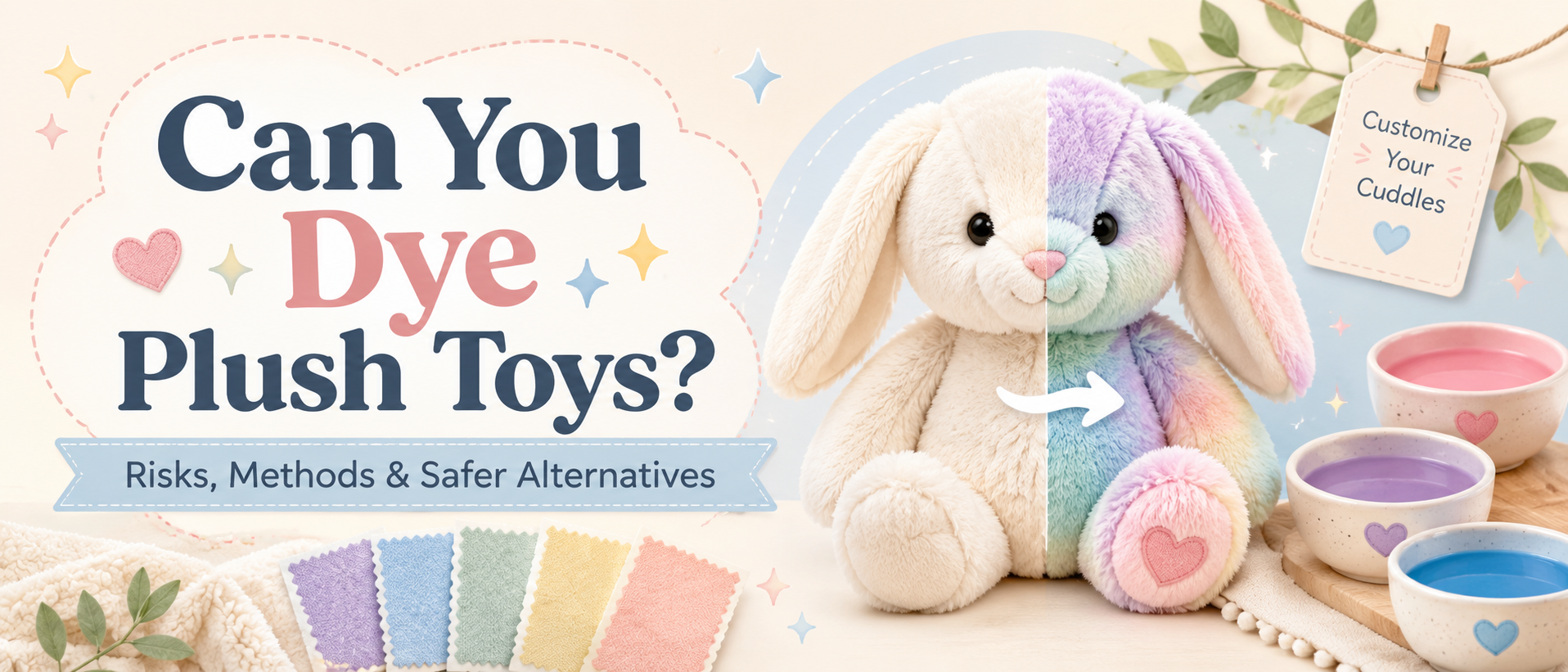
If you are wondering “can you dye stuffed animals”, the answer is yes—but most modern plush toys are made from synthetic fibers that make dyeing difficult and risky. Whether you want to customize stuffed animals for a craft project, or restore a vintage bear you found at a thrift store, tossing it into a pot of dye seems like an easy fix.
However, before you attempt to recolor a stuffed animal, you need to understand the material science behind it. While it is technically possible to change a plush toy’s color, the process can permanently destroy the soft, cuddly texture of the fur if done incorrectly. Let’s explore when dyeing makes sense, the hidden risks, and how to do it safely.
When Dyeing a Stuffed Animal Makes Sense
Not all plush toys should be dyed. Plush toy customization is a fun DIY project, but it should be reserved for specific situations. Dyeing is a great idea if you are working with:
- Old or Cheap Plush Toys: Toys that you don’t mind ruining if the experiment goes wrong.
- 100% Cotton Plushies: Natural fibers absorb dye easily without needing extreme heat.
- Craft & Cosplay Projects: When you need a very specific color for a display piece rather than a cuddling companion.
On the other hand, you should never attempt to dye expensive plushies, toys with sentimental value, or ultra-soft Minky fabric. The risk of ruining them is simply too high.
Should You Dye Your Plush Toy? (Decision Guide)
Use this quick reference table to decide if your specific toy is a good candidate for a color change.
| Plush Type | Dye Recommendation |
|---|---|
| Polyester Minky | ❌ Not recommended (Will melt and lose softness) |
| Faux Fur Plush | ❌ High risk (Fibers will mat and tangle) |
| Cotton Plush (Natural) | ✅ Possible (Takes dye very well) |
| Old Cheap Plush | ⚠️ Experiment only (Expect texture changes) |
| Valuable / Sentimental Plush | ❌ Avoid (Irreversible process) |
The Material Science: Why Synthetic Fibers Resist Dye
The success of any dye project depends entirely on the material. If your stuffed animal is made of 100% natural cotton, it will take standard fabric dyes easily. However, most modern stuffed animals—especially the ultra-soft ones—are made from 100% polyester or acrylic fibers.
Polyester is essentially a plastic. Standard fabric dyes (like regular Rit Dye) or craft techniques like tie-dye will simply wash right off a polyester plush toy. To successfully change plush toy color, you must use a specialized synthetic dye (such as Rit DyeMore for Synthetics).
⚠️ The Boiling Water Danger: Will Dyeing Ruin the Fur?
Here is where the massive risk comes in. For synthetic dye to successfully penetrate polyester fibers, the water must be maintained at a near-boiling temperature (around 200°F / 93°C) for 30 to 60 minutes.
As we’ve warned in our plush washing guide, exposing synthetic fur to high heat causes the fine plastic fibers to literally melt, curl, and fuse together. Your incredibly soft plushie may come out of the dye bath feeling like a harsh, scratchy scouring pad.
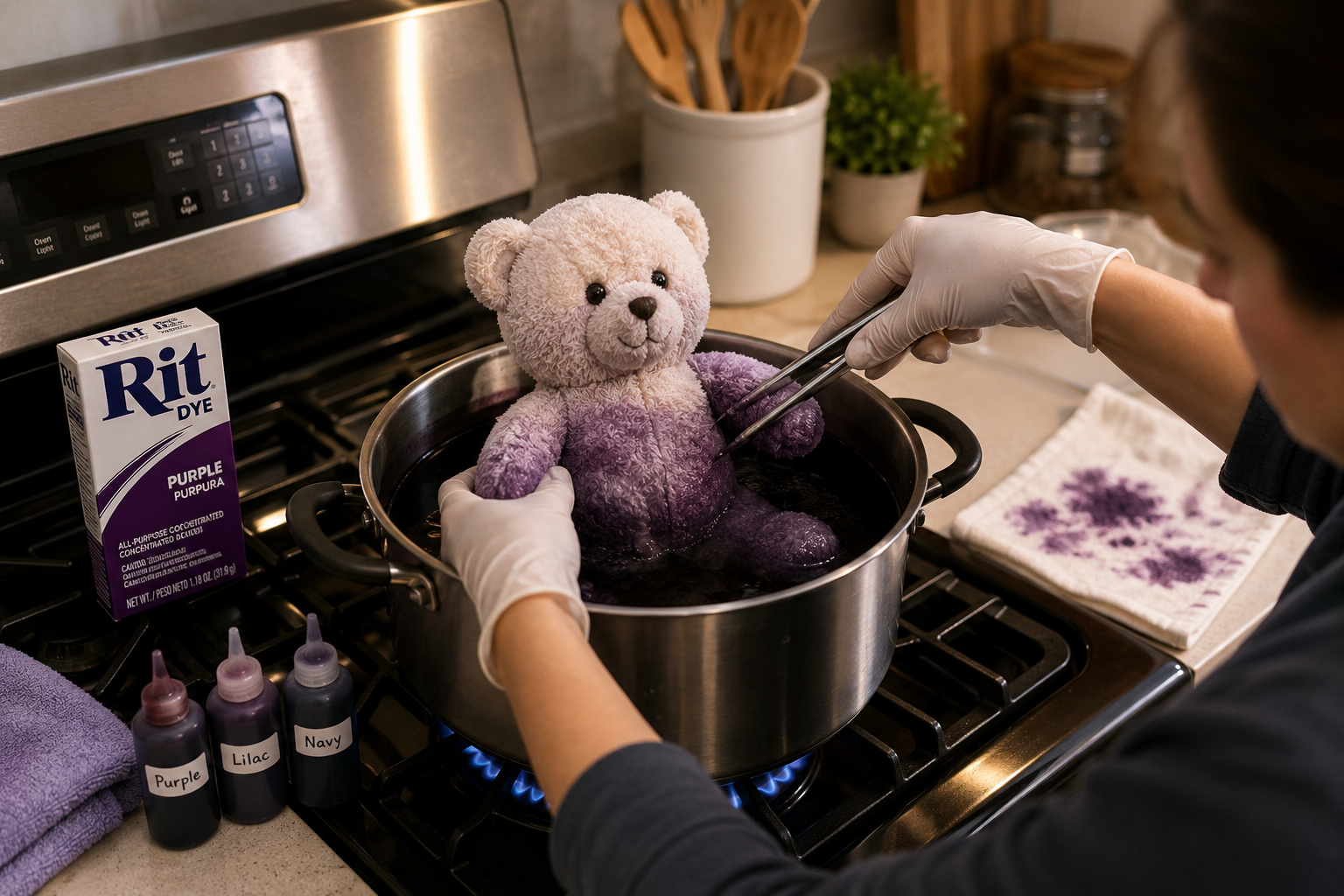
How to Experiment With Dyeing an Old Plush Toy
If you have an old toy and you are determined to experiment with a color change, here is the safest step-by-step method to dye a synthetic stuffed animal.
Can You Dye Squishmallows or Minky Plushies?
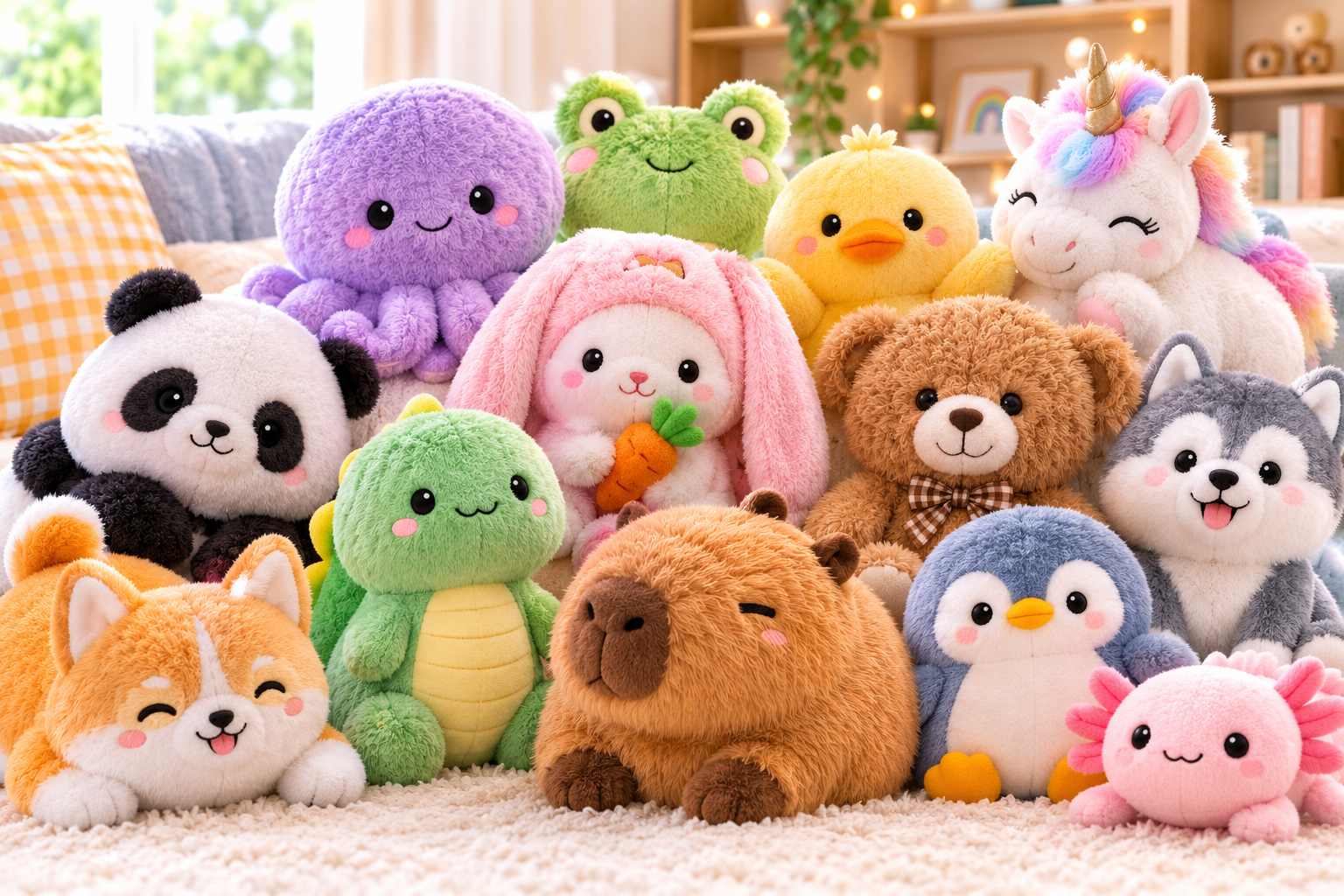
Squishmallows and many of our giant stuffed animals are famous for their marshmallow-like texture. This texture comes from premium “Minky” spandex-polyester blends. You should absolutely avoid dyeing them. The near-boiling water required for the dye will instantly destroy the spandex elasticity and melt the ultra-fine Minky fibers. They will never feel soft again.
How to Restore Faded Stuffed Animals (Without Dyeing)
If your goal is simply to restore a vintage toy that looks a bit dull or faded, you might not need dye at all. Often, fading is just an accumulation of dust and trapped oils. A gentle bath in cold water with a specialized plush cleaner, followed by a thorough brushing with a soft-bristled brush, can bring the original vibrant colors back to life without the risk of melting the fur.
Find Your New Favorite Plush Color ✨
Dyeing a stuffed animal is a messy project that carries a very high risk of destroying the toy’s soft texture. Instead of risking a beloved plush toy, choose a soft, ready-made companion in the exact color you love.
Explore our professionally crafted, deeply dyed plushies that are guaranteed to stay buttery-soft and vibrant for years to come.
Frequently Asked Questions
Yes, but only by using a specialized synthetic fabric dye (like Rit DyeMore) and keeping the water at a near-boiling temperature for up to an hour. Standard dyes will wash right off polyester.
If you want to customize a plush toy without using wet dyes, you can use fabric markers or airbrushing for small details. However, to completely change the color safely, your best option is to simply purchase a new custom plush toy in your desired color.
No. Food coloring only works on porous, natural materials. Because most modern stuffed animals are made of synthetic polyester, food coloring will just sit on the surface and wash out completely the first time the toy gets wet.
Yes, it is highly likely. To successfully dye synthetic plush, the dye bath must be near-boiling. This extreme heat melts the fine tips of synthetic fur, causing them to fuse together and become permanently rough and scratchy.
No. Human hair dye is formulated to penetrate keratin (natural hair). It contains harsh chemicals that will not permanently bond to synthetic plastic fibers like polyester, leaving a sticky, messy stain instead.