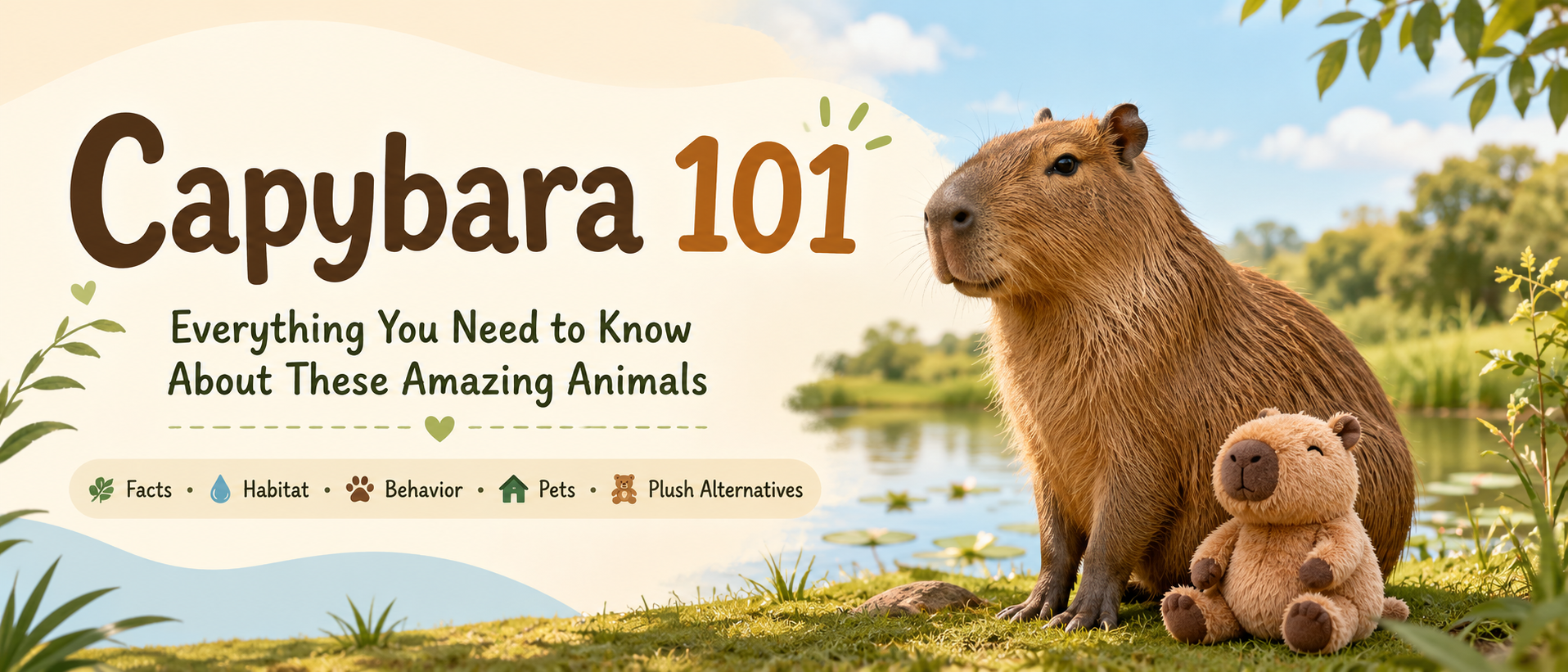
Capybaras have become one of the internet’s favorite animals. From viral videos on TikTok to adorable memes across social media, these calm and friendly-looking creatures have captured the attention of millions of people around the world.
Many people search for questions like “Are capybaras friendly?”,
“Can you own a capybara?”, and
“Why are capybaras so popular?”.
Although they may look like oversized guinea pigs, capybaras are unique wild animals with special needs and behaviors.
In this guide, we will explore capybara facts, their habitat, diet, personality, pet ownership challenges, and why many animal lovers choose a cute capybara plush toy as a fun alternative.
What Is a Capybara?
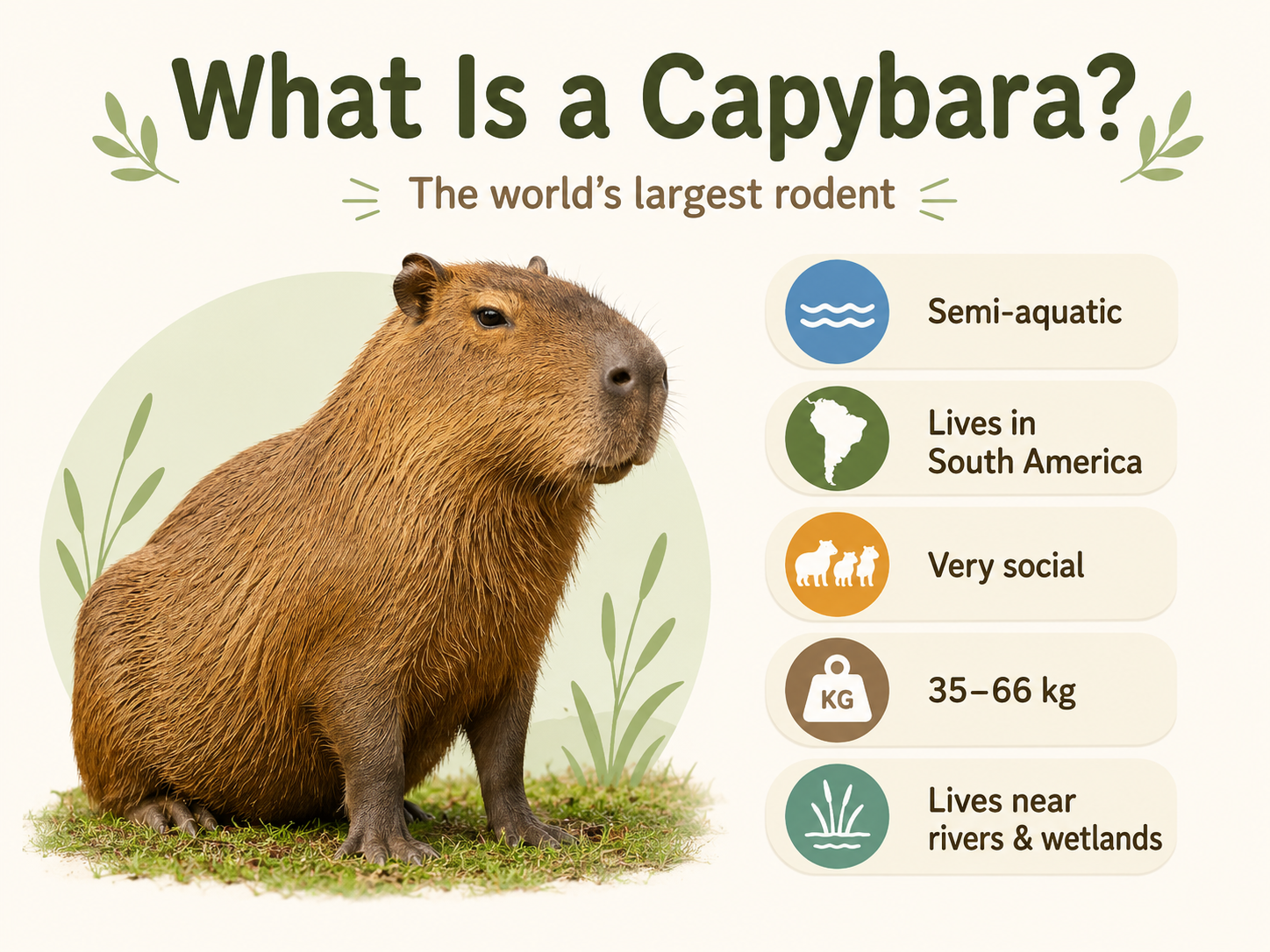
The capybara is the largest living rodent in the world. It belongs to the same family as guinea pigs and rock cavies, but it is much larger in size.
Capybaras are semi-aquatic animals, meaning they spend a large amount of their time near rivers, lakes, wetlands, and ponds.
Unlike many rodents, capybaras are highly social animals. They usually live in groups and communicate with each other through sounds, body language, and scent markings.
Capybara Facts You Should Know
| Feature | Details |
|---|---|
| Scientific Name | Hydrochoerus hydrochaeris |
| Family | Caviidae (same family as guinea pigs) |
| Average Weight | 35–66 kg (77–145 lbs) |
| Length | About 1–1.3 meters long |
| Lifespan | Around 8–10 years in the wild |
| Habitat | South American wetlands, rivers, and grasslands |
Where Do Capybaras Live?
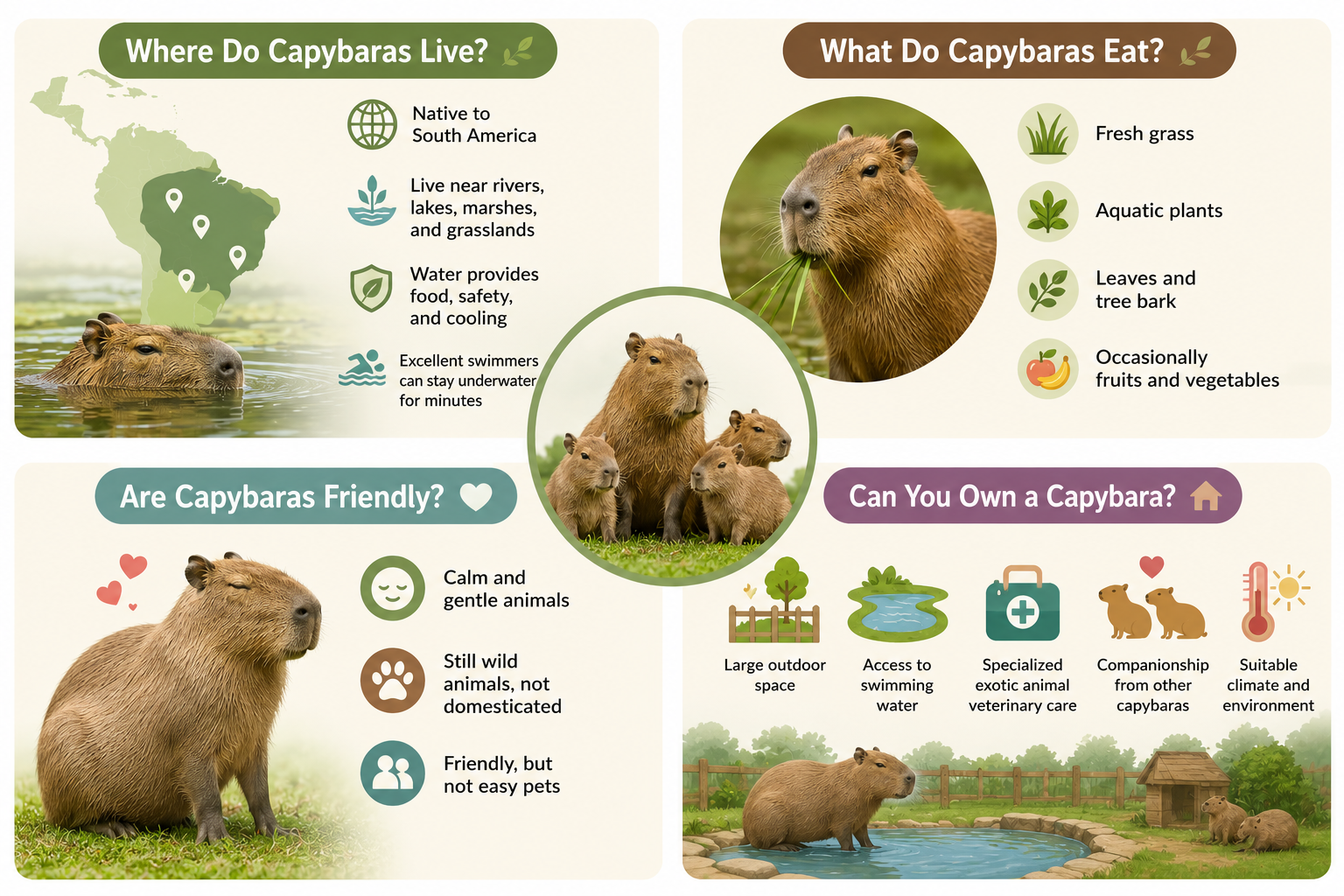
Capybaras are native to South America. They can be found in countries including Brazil, Venezuela, Colombia, Argentina, and Uruguay.
Their favorite environments are areas with plenty of water and vegetation. Rivers, lakes, marshes, and flooded grasslands provide everything they need: food, protection from predators, and a place to cool down.
Because capybaras are excellent swimmers, water plays an important role in their daily lives. They can stay underwater for several minutes when escaping danger.
What Do Capybaras Eat?
Capybaras are herbivores, meaning they only eat plants. Their diet mainly consists of grasses, aquatic plants, tree bark, and some fruits.
- Fresh grass
- Aquatic plants
- Leaves and tree bark
- Occasionally fruits and vegetables
Their digestive system is specially adapted to process large amounts of plant material. Like other rodents, their teeth continue growing throughout their lives.
Are Capybaras Friendly?
Capybaras are often described as calm and gentle animals. Their relaxed personality is one of the main reasons they became internet celebrities.
However, it is important to understand that they are still wild animals. A capybara may become comfortable around humans, but it does not behave like a domesticated dog or cat.
Their friendly appearance does not mean they are easy pets. They have complex social, environmental, and dietary requirements.
Can You Own a Capybara as a Pet?
Many people wonder if they can keep a capybara at home after seeing adorable videos online. The answer depends on local laws, but ownership is restricted in many areas.
Even where owning a capybara is possible, they require much more care than most people expect.
- Large outdoor space
- Access to swimming water
- Specialized exotic animal veterinary care
- Companionship from other capybaras
- A suitable climate and environment
Important:
Capybaras are amazing animals, but they are not suitable pets for most households.
For people who love their peaceful personality and cute appearance, a capybara plush toy is a safe and enjoyable alternative.
Real Capybara vs. Capybara Plush: Which Is Better?
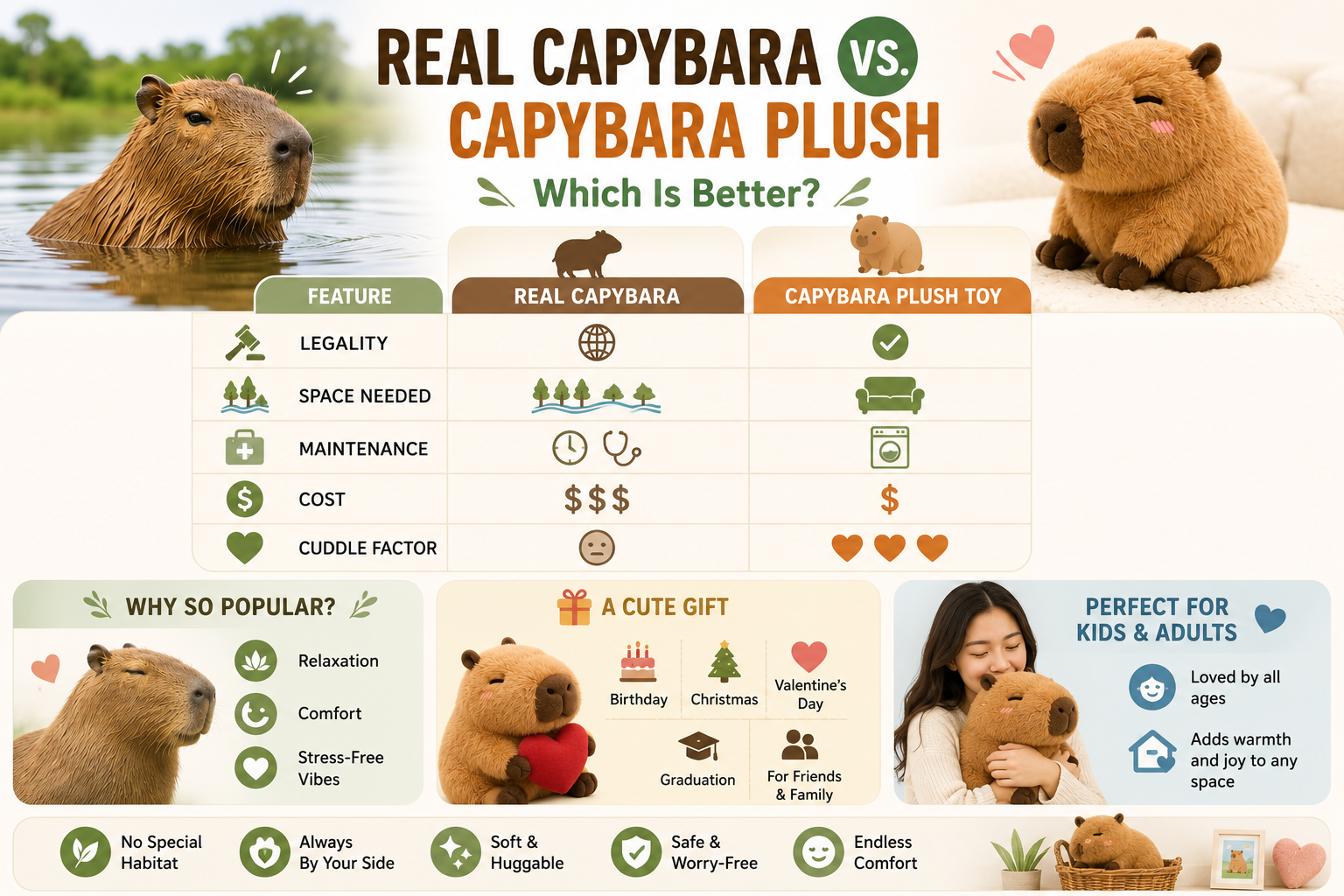
Real capybaras are fascinating animals, but they are not practical pets for most people. They require specialized care, plenty of space, and an environment that is difficult to recreate at home.
For animal lovers who simply enjoy the cute appearance and peaceful personality of capybaras, a capybara plush toy offers many of the same emotional benefits without the challenges of caring for a wild animal.
| Feature | Real Capybara | Capybara Plush Toy |
|---|---|---|
| Legality | Restricted in many locations | Safe and legal everywhere |
| Space Needed | Large outdoor area and water access | Fits on a bed, sofa, or shelf |
| Maintenance | Daily specialized care | Simple cleaning and care |
| Cost | High food, habitat, and veterinary costs | Affordable for most families |
| Cuddle Factor | Wild animal behavior | Soft, comfortable, and huggable |
Why Are Capybara Plush Toys So Popular?
The popularity of capybara plush toys comes from more than just their appearance. Capybaras have become symbols of relaxation, comfort, and a stress-free lifestyle.
Their calm expression and peaceful personality represent the idea of slowing down and enjoying simple moments. This is one reason why people of all ages love capybara-themed products.
A soft capybara plush toy can become a cozy companion for bedrooms, offices, reading corners, or relaxation spaces.
A Cute Gift for Animal Lovers
Capybara plushies make thoughtful gifts for people who love unique animals, cute designs, and comforting home decorations.
They are suitable for many occasions, including:
- Birthday gifts
- Christmas presents
- Valentine’s Day gifts
- Graduation gifts
- Comfort gifts for friends and family
Perfect for Kids and Adults
Although plush toys are often associated with children, capybara plush toys have become popular among teenagers and adults as well.
Many adults enjoy collecting cute animal plushies because they add personality to their living spaces and provide a sense of comfort after a busy day.
How to Choose the Right Capybara Plush Toy
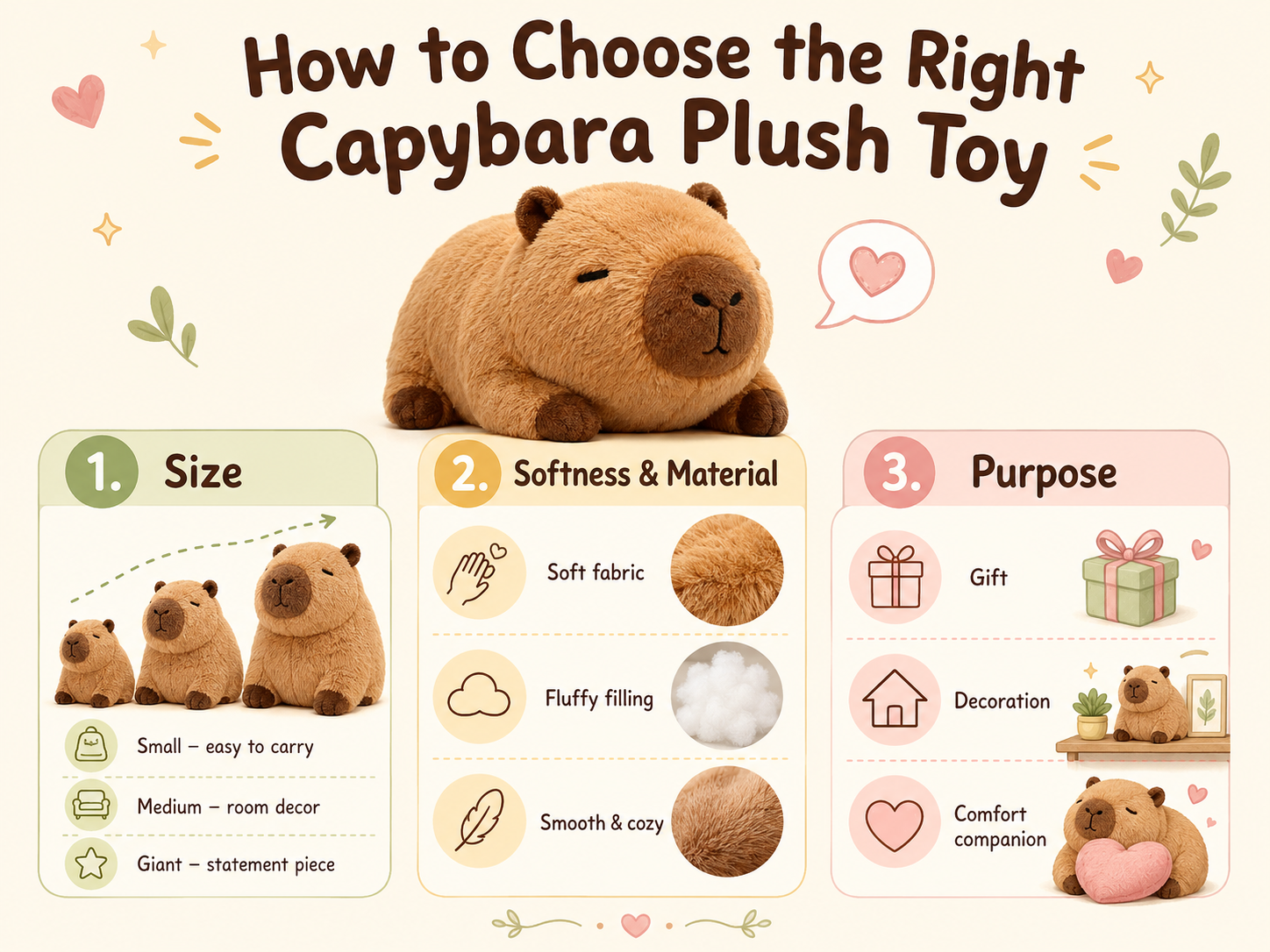
When choosing a capybara plush, size, material, and design are important factors to consider.
1. Choose the Right Size
Small capybara plush toys are easy to carry and make great desk companions. Medium sizes work well as bedroom decorations, while giant capybara plush toys create a fun statement piece.
2. Check the Softness and Material
A high-quality plush toy should use soft fabric with comfortable stuffing. The best plushies feel smooth, fluffy, and pleasant to touch.
3. Consider the Purpose
Some people buy capybara plush toys as gifts, while others want a cute decoration or a relaxing companion.
Choosing the right style depends on how you plan to use it.
Bring Home Your Own Chill Capybara Companion
You don’t need a backyard pond to enjoy the peaceful charm of a capybara. A soft capybara plush toy brings the same cute energy into your everyday life.
Frequently Asked Questions About Capybaras
Can you legally own a capybara?
Capybara ownership laws vary depending on location. Some regions completely prohibit private ownership, while others may require permits. Always check local wildlife regulations before considering an exotic animal.
Are capybaras good pets?
Capybaras are social and intelligent animals, but they are not suitable pets for most people. They require large spaces, water access, special diets, and proper care from experienced owners.
Why are capybaras so popular?
Capybaras became popular because of their calm personality, unique appearance, and viral internet videos. Many people associate them with relaxation and peaceful living.
Are capybaras related to guinea pigs?
Yes. Capybaras and guinea pigs belong to the same rodent family. However, capybaras are much larger and have very different lifestyles.
How big can a capybara get?
Adult capybaras can weigh between 35 and 66 kilograms and grow over one meter long, making them the largest rodents in the world.
Do capybaras like humans?
Some capybaras can become comfortable around humans, but they are still wild animals. Their behavior is different from domesticated pets.
How long do capybaras live?
Wild capybaras usually live around 8 to 10 years. Their lifespan can vary depending on their environment and health conditions.
What is the best alternative to owning a capybara?
For people who love capybaras but cannot provide the care they need, a capybara plush toy is a fun and practical alternative.
Final Thoughts: Enjoy the Capybara Lifestyle
Capybaras have earned their reputation as one of the world’s most lovable animals. Their calm personality, social behavior, and adorable appearance make them fascinating creatures.
However, owning a real capybara is a serious responsibility that requires special knowledge, space, and resources.
For most animal lovers, enjoying a cute capybara plush toy is the easiest way to bring their peaceful energy into everyday life.
Find Your Perfect Capybara Plush Companion
Discover soft, adorable capybara plush toys designed for animal lovers, collectors, and anyone who wants a little more comfort in their day.