Written by: My Kawaii Toys Editorial Team
Our Research Process: Our team researches plush toy materials, textile construction, fabric durability, and consumer comfort factors. We compare popular plush fabrics including Minky, fleece, faux fur, and cotton to help shoppers understand what makes a stuffed animal soft, safe, and long-lasting.
Have you ever bought a stuffed animal online that looked incredibly soft in photos, only to discover that the fabric feels rough or cheap when it arrives?
The biggest difference between an ordinary plush toy and a premium plush companion usually comes down to one thing: the fabric used on the outside.
While stuffing determines the shape and firmness, the outer material controls the things people notice immediately — softness, texture, durability, shedding, and how comfortable the plush feels against your skin.
Whether you are looking for the softest fabric for stuffed animals, choosing a gift, or learning about plush toy fabric types for making your own creations, this guide explains everything you need to know about modern plush materials.
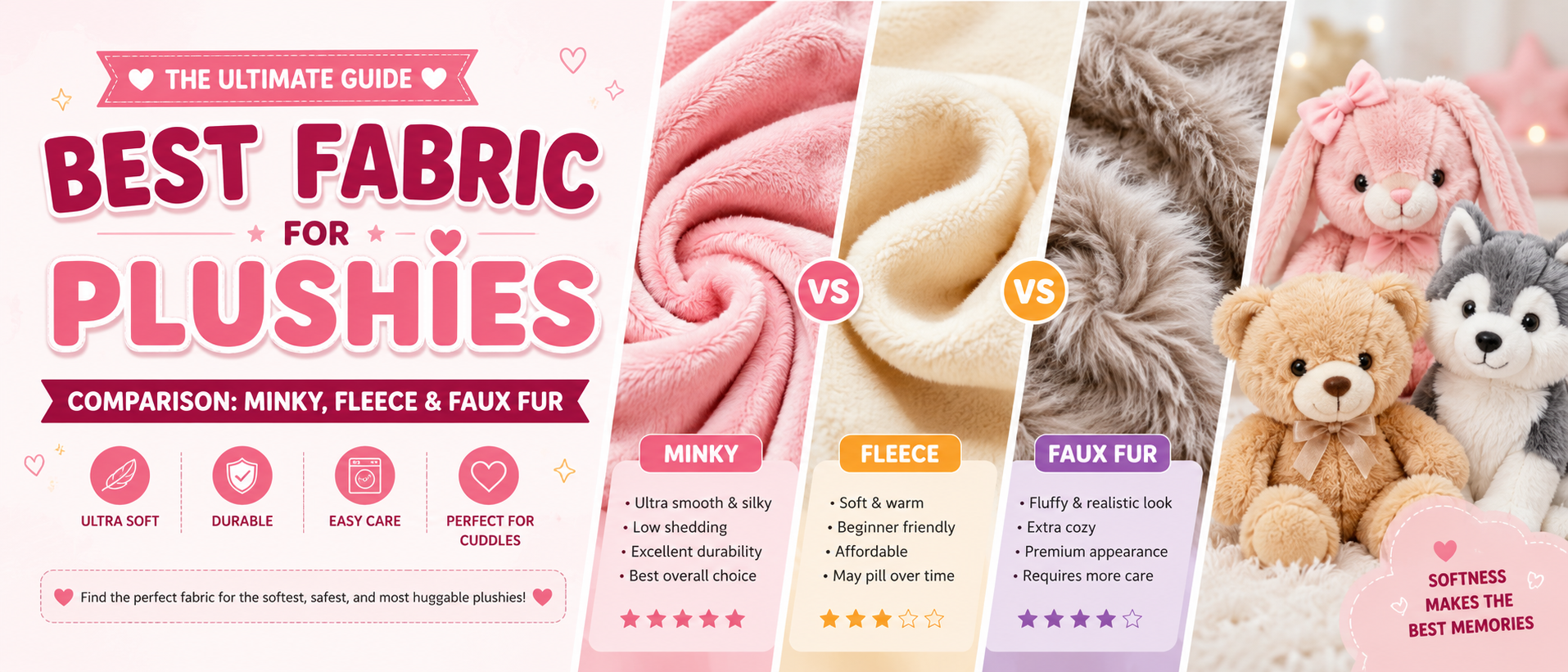
Quick Answer: The best overall fabric for plushies is usually Minky fabric (also called Crystal Super Soft). It is popular because it has a smooth, silky texture, excellent softness, low shedding, and good durability. For extra fluffy decorative plush toys, premium faux fur is another popular choice.
Plush Fabric Ranking: Which Material Is Best?
Different plush fabrics have different strengths. The best choice depends on whether you want maximum softness, easy cleaning, realistic animal fur texture, or a beginner-friendly material for handmade plush toys.
★★★★★ 1. Minky / Crystal Super Soft — Best Overall Plush Fabric
Minky is one of the most popular materials used in modern premium plush toys. Made from ultra-soft polyester microfiber, it has a smooth surface, gentle stretch, and a luxurious feel that works especially well for cuddle plushies, stuffed animals, and sensory toys.
★★★★☆ 2. Faux Fur — Best for Fluffy Realistic Plushies
Faux fur creates the long, fluffy appearance often seen in realistic animal plush toys. High-quality versions can feel extremely soft and provide a cozy appearance, although longer fibers usually require more care during washing.
★★★☆☆ 3. Polyester Fleece — Best Beginner Plush Material
Fleece is affordable, easy to sew, and widely used by beginners making handmade plush toys. It feels warm and comfortable, but repeated friction may cause pilling over time.
★★★☆☆ 4. Cotton — Best for Baby Sensory Toys
Cotton is breathable and gentle, making it a good option for baby toys and small sensory products. However, it does not provide the same fluffy, huggable feeling as Minky or plush fur fabrics.
Why Minky Is One of the Best Fabrics for Plushies
If you have ever hugged a modern squishy plush toy and wondered why it feels smoother and softer than traditional stuffed animals, the answer is often the outer fabric.
Minky fabric has become a favorite choice among plush manufacturers because it combines a silky texture with durability and easy maintenance. Unlike some traditional fuzzy fabrics, Minky has a smooth microfiber surface that feels soft against the skin and works well for everyday cuddling.
The quality of Minky can vary depending on the fabric construction, thickness, fiber quality, and finishing process. Higher-quality versions usually feel denser, smoother, and more luxurious compared with budget polyester fabrics.
Why Plush Makers Choose Minky Fabric
- Ultra-soft texture: The microfiber surface creates a smooth, comfortable feeling that is ideal for hugging plushies.
- Low shedding: Quality Minky fabrics have a stable surface that helps reduce loose fibers compared with some long-pile materials.
- Flexible construction: Many Minky fabrics have slight stretch, making them easier to shape around rounded plush designs.
- Easy maintenance: Most Minky plush toys can be cleaned with gentle washing methods.
Fabric Density Explained: Why Some Plushies Feel More Premium
When comparing plush toys, many shoppers focus only on appearance. However, fabric density also affects how a plush feels in your hands.
Textile manufacturers often use GSM (grams per square meter) as one measurement of fabric weight and density. Generally, heavier and denser fabrics tend to create a fuller, softer surface compared with lightweight materials.
A premium plush toy usually combines quality outer fabric, strong stitching, and suitable stuffing. The fabric alone does not determine quality, but it plays a major role in the overall touch and durability of the product.
Best Fabric for Making Plushies at Home
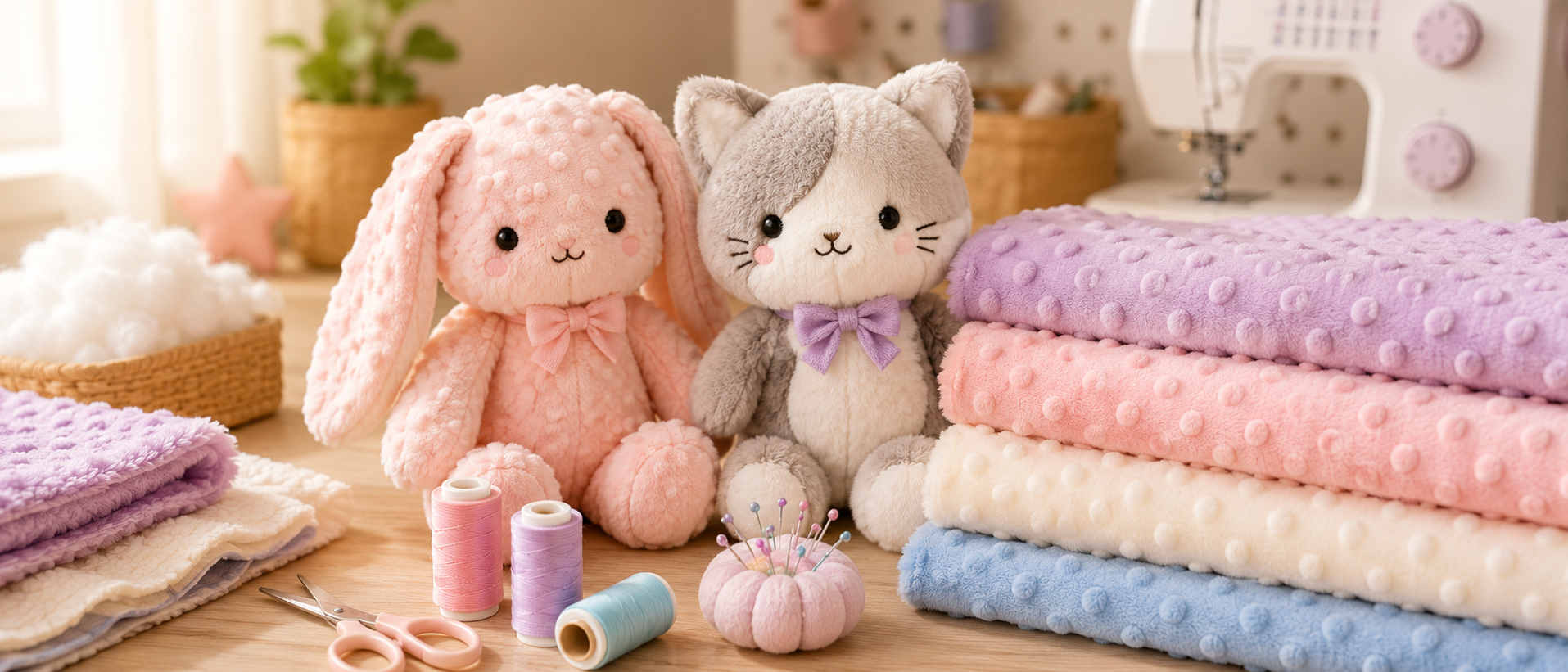
For people who enjoy sewing or creating handmade plush toys, the “best” fabric depends on your experience level and the style of plush you want to make.
Beginners often prefer fabrics that are easy to cut and sew, while experienced plush makers may choose specialized materials to create professional-looking stuffed animals.
| Fabric | Best For | Difficulty |
|---|---|---|
| Minky | Professional-looking plushies, cuddle toys, kawaii stuffed animals | Intermediate |
| Fleece | Beginner sewing projects and simple plush designs | Easy |
| Faux Fur | Realistic animal plushies and fluffy designs | Advanced |
| Cotton | Small handmade toys and baby sensory products | Easy |
What Are Plushies Made Of?
Most modern plush toys are made from a combination of several materials rather than a single fabric.
- Outer fabric: Common choices include Minky, faux fur, fleece, and cotton.
- Inner stuffing: Many plush toys use polyester fiberfill because it is lightweight, washable, and maintains shape.
- Additional components: Some designs include embroidery, plastic safety eyes, weighted beads, or decorative elements.
Plush Fabric Safety: What Buyers Should Know
A stuffed animal is often placed close to your face, held for hours, or used as a sleeping companion. Because of this, fabric safety is an important factor when choosing a plush toy.
High-quality plush manufacturers pay attention not only to softness, but also to dye safety, fiber quality, and how the material performs over time.
Important Plush Fabric Quality Checks
- OEKO-TEX Standard 100: Many textile manufacturers use this certification to verify that fabrics have been tested for harmful substances and chemical residues.
- Colorfast Dyes: Good-quality plush fabrics should maintain their color after normal washing instead of releasing excessive dye.
- Low Fiber Shedding: Stable fabric construction helps reduce loose fibers and improves long-term comfort.
What Is the Best Hypoallergenic Fabric for Stuffed Animals?
For shoppers concerned about allergies, the most suitable plush materials are usually smooth, tightly constructed fabrics that do not easily release loose fibers.
Minky polyester is popular because its smooth microfiber surface does not behave like natural animal fibers. Organic cotton is another common choice, especially for baby toys where breathability is important.
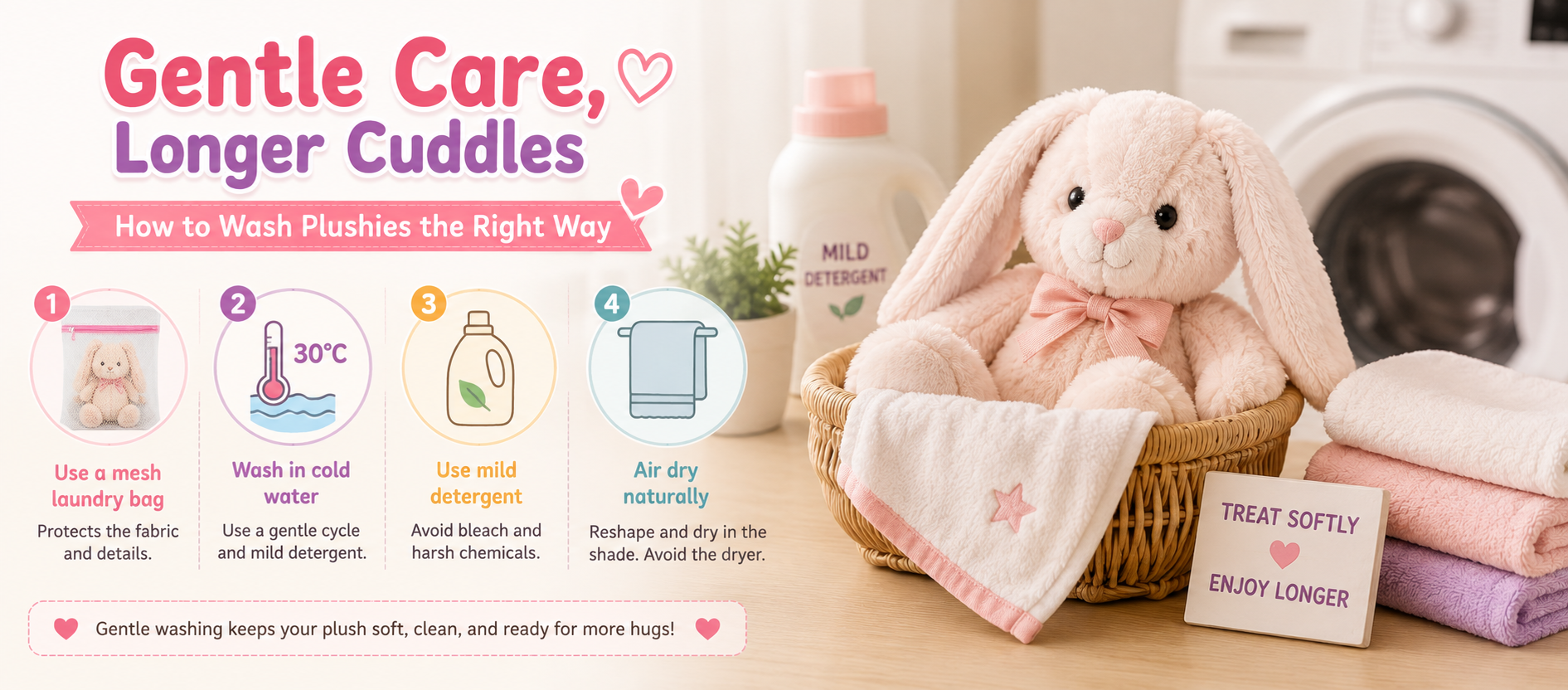
How Fabric Affects Plush Toy Washing and Longevity
Even a beautiful plush toy can lose its softness if the fabric is not cared for correctly. Different materials react differently to washing, friction, and heat.
Long-pile faux fur may require more careful cleaning because the fibers can become tangled. Fleece may develop pilling after repeated friction. Minky usually maintains its smooth texture well when washed gently.
Basic Plush Cleaning Tips
- Wash with cold or lukewarm water when possible.
- Use gentle detergent instead of harsh chemicals.
- Avoid excessive heat from dryers.
- Air drying helps protect the softness and shape of plush fabrics.
Minky vs Faux Fur vs Fleece vs Cotton: Plush Fabric Comparison
Use this comparison table to understand the advantages and disadvantages of the most common stuffed animal materials.
| Fabric | Softness | Durability | Maintenance | Best For |
|---|---|---|---|---|
| Minky | ★★★★★ | ★★★★★ | Easy | Cuddle plushies, kawaii toys, everyday companions |
| Faux Fur | ★★★★★ | ★★★★☆ | Moderate | Realistic animals and decorative plush |
| Fleece | ★★★☆☆ | ★★★★☆ | Moderate | Beginner handmade plush projects |
| Cotton | ★★★☆☆ | ★★★★☆ | Easy | Baby toys and sensory products |
How to Check Plush Fabric Quality in 3 Seconds
When buying a stuffed animal online or in a store, you can use a few simple checks to estimate whether the fabric quality is premium or budget-level.
- The Touch Test: Premium plush fabric should feel smooth and comfortable immediately. Rough, plastic-like, or stiff textures often indicate lower-quality materials.
- The Fiber Test: Gently rub the surface. Excessive loose fibers coming away from the fabric may indicate poor construction.
- The Shape Test: A well-made plush toy should return to its original shape after gentle squeezing. Quality fabric and stuffing work together to maintain structure.
Which Plush Fabric Should You Choose?
The best fabric depends on how the plush toy will be used.
For everyday cuddling:
Choose Minky or Crystal Super Soft fabric because it provides a smooth, cozy texture that works well for frequent handling.
For realistic animal plushies:
Choose faux fur if you want a fluffy appearance similar to real animal coats.
For handmade beginner projects:
Fleece is affordable and easy to sew, making it a popular starting material.
For baby sensory toys:
Cotton is breathable and gentle, making it suitable for many infant products.
Experience Premium Plush Comfort
Discover soft, adorable plush companions designed with comfort, quality materials, and everyday cuddling in mind.
Frequently Asked Questions About Plush Fabrics
What is the softest fabric for stuffed animals?
Minky fabric is widely considered one of the softest materials for modern stuffed animals. Its smooth microfiber surface creates a silky and comfortable feeling that works especially well for cuddle plushies.
What fabric are Squishmallows made of?
Squishmallows are known for their extremely soft texture. Similar squishy plush designs often use stretchy polyester-based fabrics that create a smooth, flexible outer surface combined with soft polyester filling.
Is polyester safe for stuffed animals?
High-quality polyester is one of the most common materials used in plush toys because it is lightweight, durable, and easy to clean. The quality of the fiber, dye, and manufacturing process matters.
What is the best fabric for making plushies?
For professional-looking handmade plushies, many creators choose Minky because it provides a premium appearance and soft texture. Beginners often start with fleece because it is easier to cut and sew.
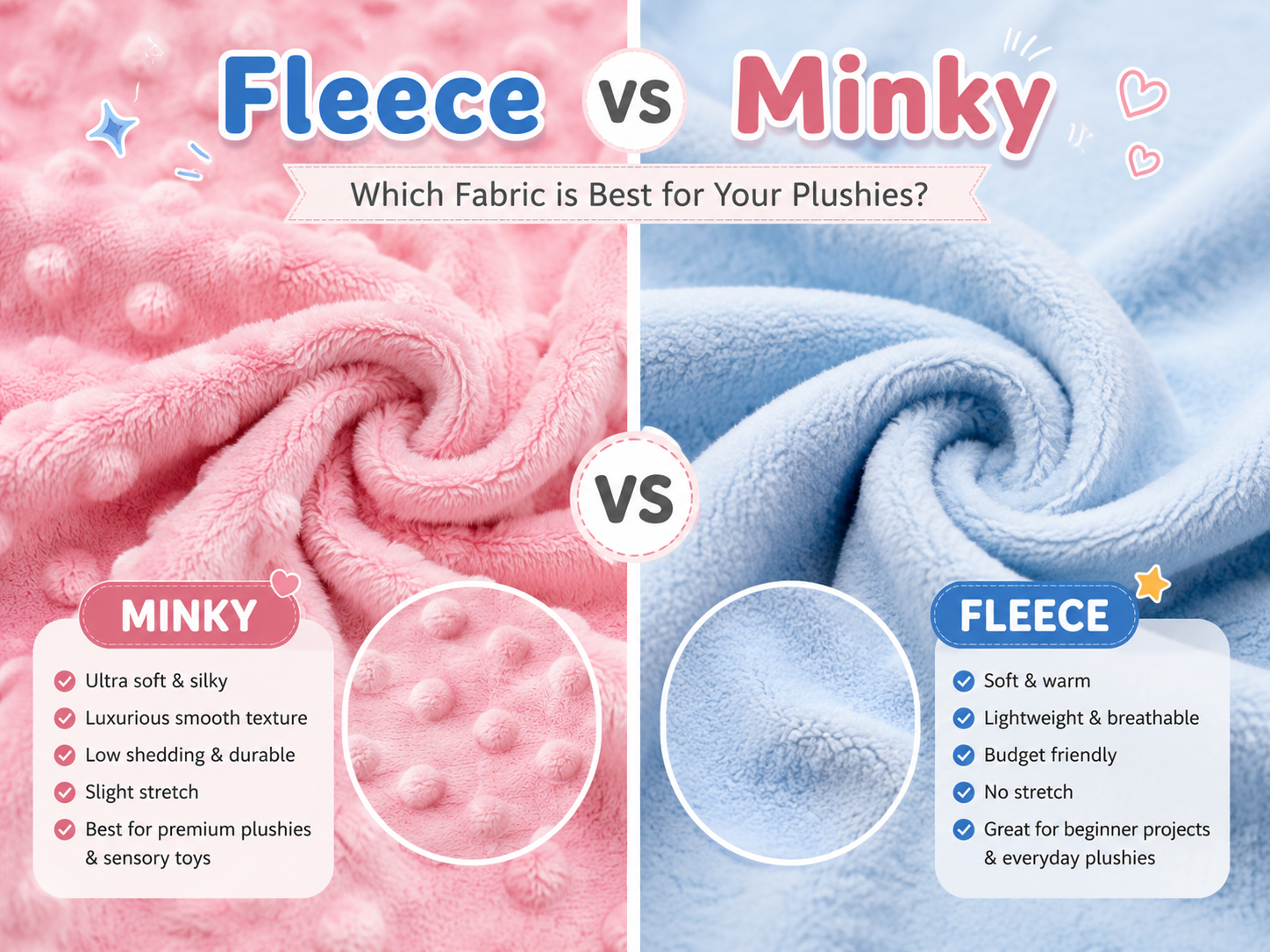
What is the difference between Minky and fleece?
Minky usually has a smoother and silkier surface, while fleece has a warmer, matte texture. Fleece is easier for beginners, while Minky is often chosen for premium plush toys.
Does faux fur shed more than Minky?
Long-pile faux fur generally requires more maintenance because the longer fibers can tangle or loosen. Minky typically has a smoother surface with less visible shedding.
What material are kawaii plush toys usually made from?
Many kawaii plush toys use soft polyester fabrics such as Minky, short plush, or other microfiber materials because they create the cute rounded appearance and soft touch that customers expect.
How do you keep plush fabric soft after washing?
Use gentle washing methods, avoid high heat, and allow the plush toy to air dry whenever possible. Proper care helps preserve the original texture of the fabric.