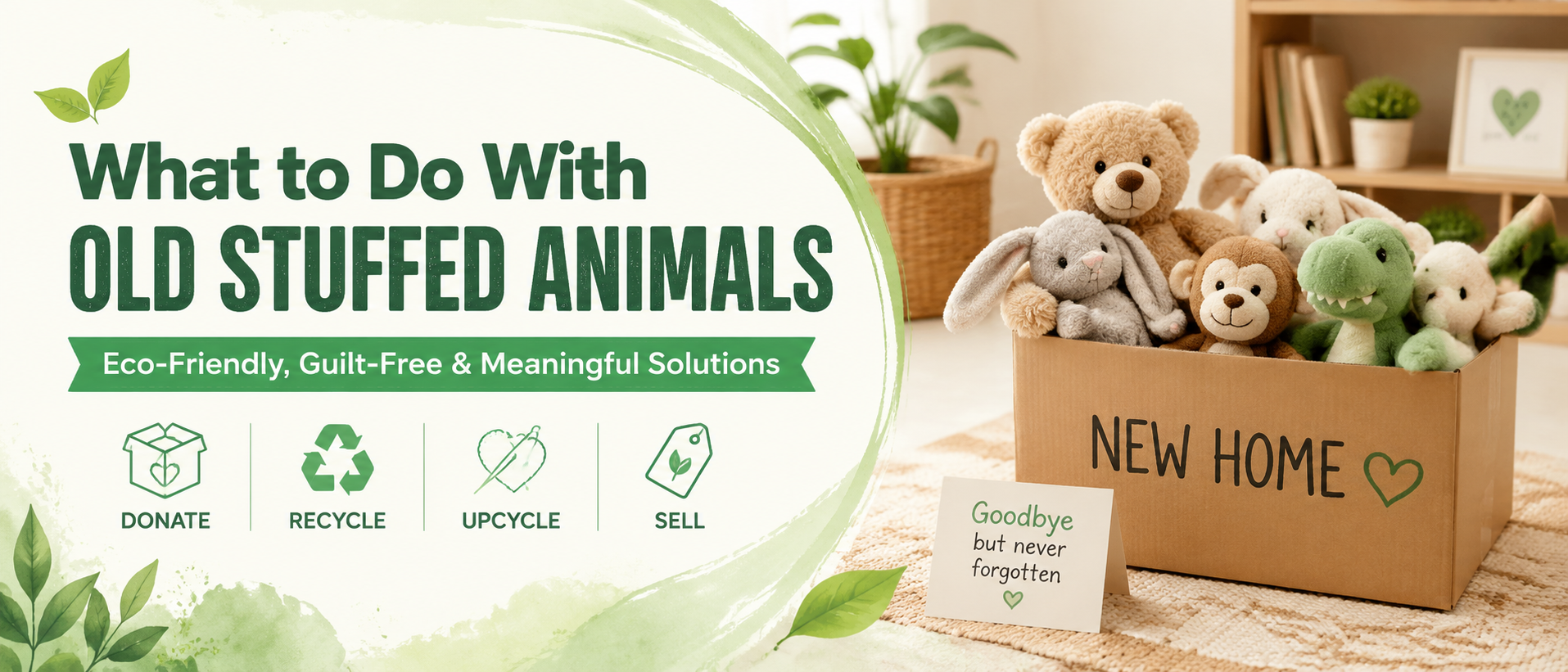
About This Guide: Our team at My Kawaii Toys created this guide to offer eco-friendly, zero-guilt methods to safely declutter your space and responsibly repurpose stuffed animals that are no longer needed.
We all have them: the stuffed animals sitting in the corner, gathering dust, but carrying too many memories to simply toss into the garbage. Letting go of old plush toys is notoriously difficult because it feels like abandoning a childhood friend, often leading to emotional guilt during the decluttering process.
However, over time, cheap stuffed animals can become rigid, trap allergens like dust mites, and take up valuable space in your home. The good news is that you don’t have to throw them all in the trash. There are several eco-friendly, meaningful, and guilt-free ways to handle your plushies. Whether you are looking to donate, recycle, upcycle, or sell, here is exactly what to do with old stuffed animals.
The Sorting Phase: The Condition Checklist
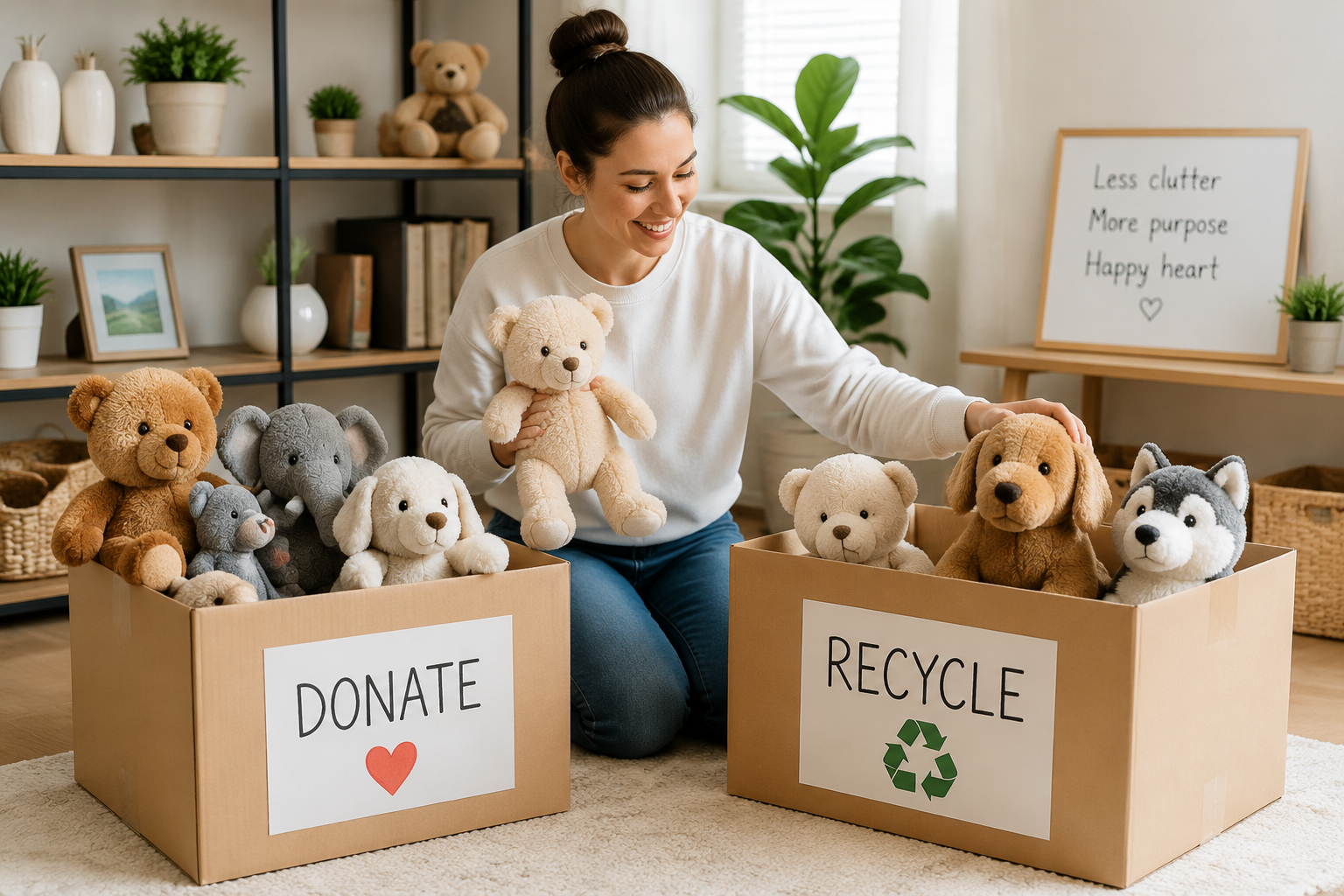
Before you decide what to do, you need to be honest about the condition of the stuffed animal. Not every plush toy can be donated. Use this decision matrix to determine the most responsible course of action for your old toys.
| Toy Condition | Donate? | Recycle? | Best Option |
|---|---|---|---|
| Like New / Gently Used | ✅ Yes | ❌ No | Donate or Sell |
| Small Damage / Torn Seams | ❌ No | Maybe | Upcycle / Repurpose |
| Heavily Stained / Smelly | ❌ No | ✅ Yes | Textile recycling |
| Moldy / Bug Infested | ❌ No | ❌ No | Dispose in trash |
How Do You Know When to Throw Away a Stuffed Animal?
While recycling and upcycling are always preferred, there are specific situations where holding onto a stuffed animal becomes a health or safety hazard. You should immediately throw away a stuffed animal if it has:
- Mold or Mildew Smell: If a toy was left in a damp basement and smells musty even after washing, mold spores have likely penetrated the inner stuffing.
- Bug Infestation: Toys that have been exposed to bed bugs, fleas, or severe dust mite infestations should be tightly sealed in a garbage bag and disposed of.
- Torn Stuffing Exposed: If the seams are irreparably shredded and the inner poly-fill is falling out, it becomes a severe choking hazard for pets and toddlers.
- Broken Electronics: Leaking battery packs or rusted voice boxes cannot be safely washed or donated.
Option 1: Where to Donate Gently Used Stuffed Animals
If your plushie is free of rips, stains, and odors, giving it a second life with a child in need is the most rewarding option. When looking to donate stuffed animals, local community organizations are often the best places to start.
Consider reaching out to these specific organizations in your area:
- Children’s Hospitals: Many accept new or like-new toys to comfort young patients.
- Foster Care Organizations: These charities frequently need comfort items for children entering new homes.
- Police & Fire Departments: First responders often keep stuffed animals in their vehicles to comfort children during traumatic events or accidents.
- Local Schools & Daycares: Check if teachers need soft toys for their reading corners or calming spaces.
- Local Family Shelters: Shelters supporting families transitioning out of crisis are almost always in need of clean, comforting toys.
Ready to Donate?
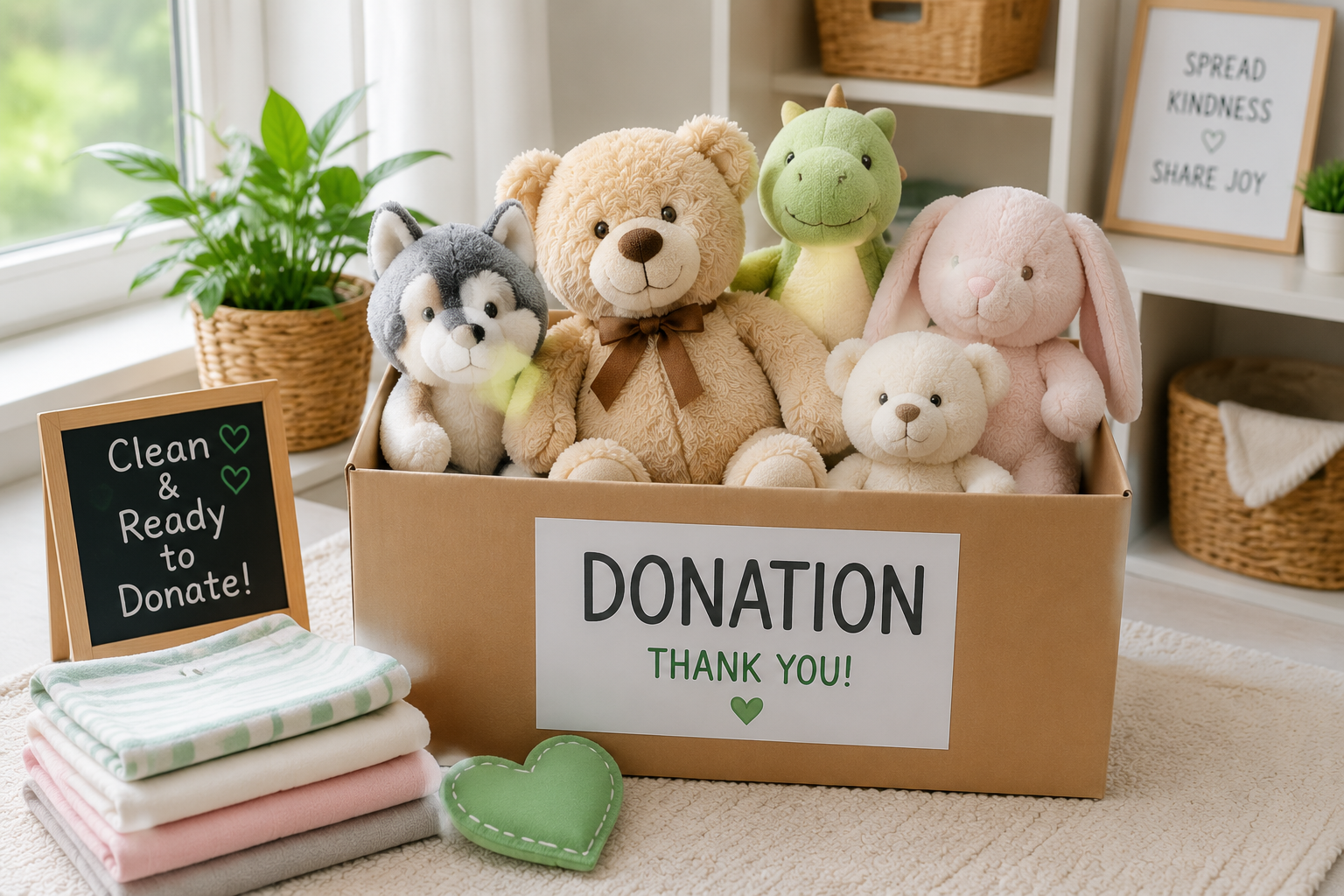
Not all charities accept used toys due to hygiene rules. To find the exact organizations near you that welcome them and learn how to package them correctly, read our complete guide on Where to Donate Stuffed Animals.
Option 2: How to Recycle Stuffed Animals
If the toy is heavily stained and cannot be donated, your next best option is recycling. However, you cannot put stuffed animals in your regular household recycling bin (the blue bin). Stuffed animals are made of mixed materials (polyester fabric, synthetic PP cotton, and hard plastics) that municipal facilities cannot process.
Instead, look for specialized textile recycling drop-offs. Some textile recycling programs may accept stuffed animals depending on your location. Organizations like TerraCycle or local clothing drop-off bins can sometimes process heavily worn textiles, shredding the old plushies to repurpose the fibers into industrial materials like carpet padding or insulation.
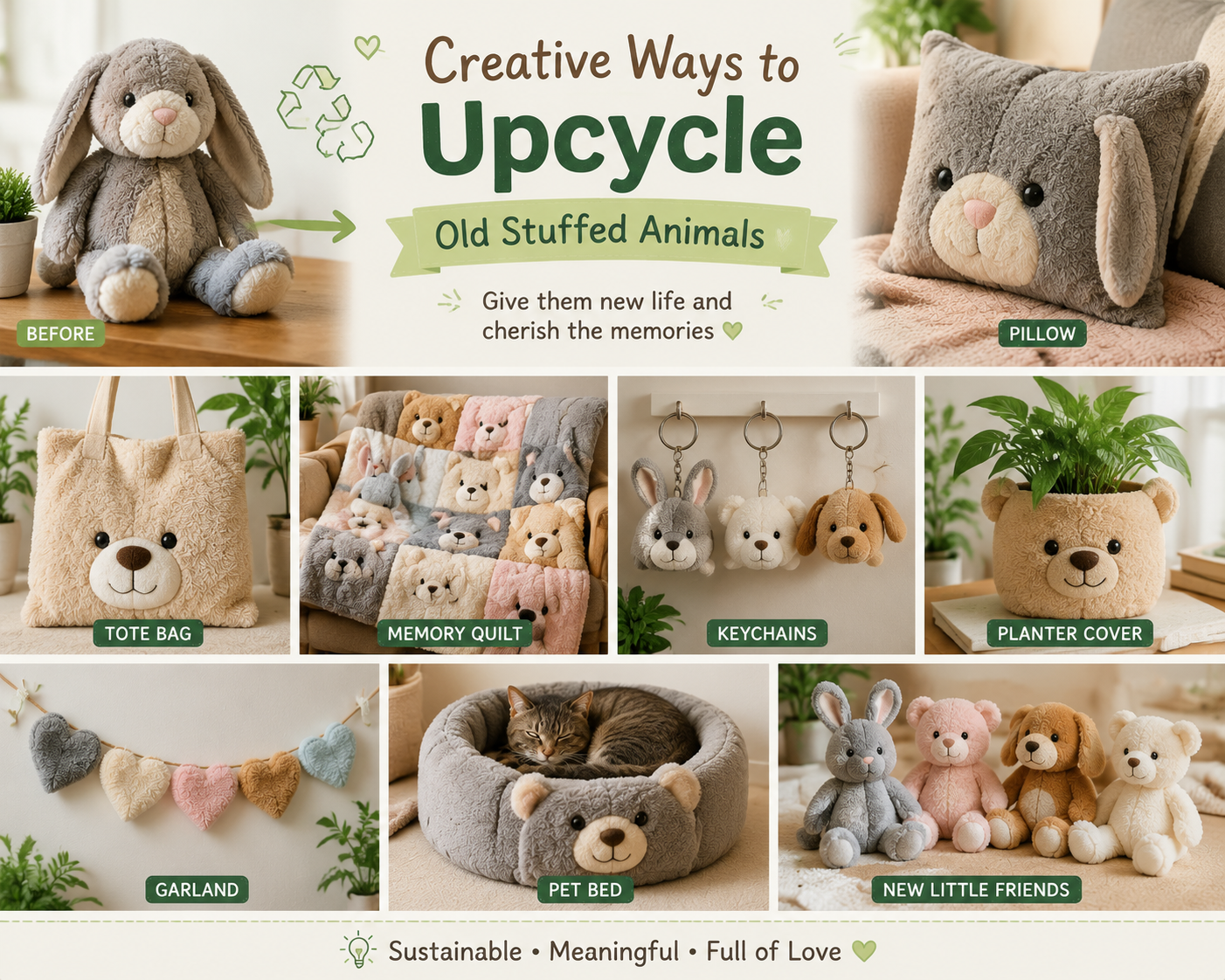
Option 3: Creative Ways to Upcycle Old Plushies
If you are crafty and want to keep a piece of the memory without keeping the whole toy, upcycling (repurposing) is a fun and sustainable alternative.
- Repurpose the Stuffing: Carefully cut open the back seam of the old plushie. If the internal stuffing is clean and dry, you can extract it to re-stuff flat pillows, make a DIY pet bed, or use it for holiday snow decorations.
- Make a Draft Dodger: If you have a long, snake-like plushie, upcycle it into a draft dodger. Place it at the bottom of a breezy door or window to help insulate your home during winter.
- Transform it into a Pet Toy: Dogs love soft toys, and an old plushie can become a great fetch companion. (Note: Remove all hard plastic eyes and beads first! Read our guide on Are Stuffed Animals Safe for Dogs? to learn more.)
Option 4: How to Sell Vintage or Collectible Stuffed Animals
Before you toss a toy, do a quick online search. If the stuffed animal is a vintage brand, a limited-edition release, or a classic character, it might hold significant value for collectors. Platforms like eBay, Mercari, or specialized Facebook collector groups are perfect for selling these items.
Time for an Upgrade? Invest in Premium Comfort
You’ve successfully decluttered the old, dusty, and lumpy toys. Now it’s time to treat yourself to a plush companion that is actually built to last.
If you love hugging oversized companions, our giant stuffed animals are crafted with hypoallergenic Minky fabric, 100% safe embroidered details, and high-rebound PP cotton that stays incredibly soft—even after multiple washes.
Find Your Forever Plush Companion ✨
Don’t settle for cheap toys that lose their shape and trap allergens. Upgrade to a premium stuffed animal designed for ultimate relaxation and easy cleaning.
Frequently Asked Questions
Yes, but it should be your last resort. If a stuffed animal is moldy, infested with bugs, or has leaking battery packs, it is a health hazard and must be thrown away in the regular trash. Otherwise, try to donate, recycle, or upcycle it first.
Charities require donations to be clean and odor-free. For most modern plush toys without electronics, you can place them in a mesh laundry bag, wash on a cold, delicate cycle with mild detergent, and air dry. Read our full guide on How to Wash Plush Toys for detailed instructions.
No. Stuffed animals are made of mixed materials that municipal facilities cannot process. You must use specialized textile recycling programs instead to avoid contaminating other recyclables in the blue bin.
These contain e-waste. You must cut open the toy, remove the battery and electronics to recycle at an e-waste facility, and then process the fabric shell separately.
Many shelters do accept them, but the toys must NOT have hard plastic eyes, button noses, or internal beads, as these are severe choking hazards for animals. Always call the shelter first.